

Country's codes
International phone code for Oman: +968
3 letters: OMN
2 letters (internet domain): .OM
Digital country code 512
Standard EAN-13 (country barcode): -
 Olympic country code: OMA
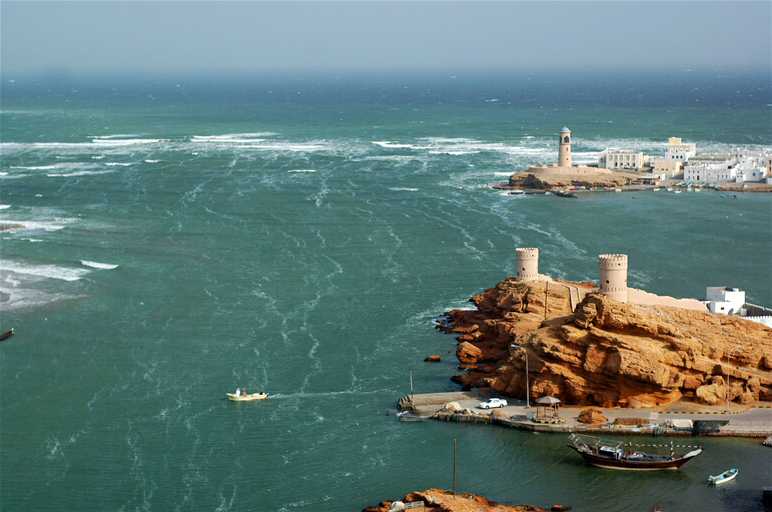
Oman: Top Attractions & Best Time to Visit
Oman blends dramatic desert landscapes, pristine beaches, ancient forts, and warm Arabian hospitality—making it one of the Middle East’s most enchanting and underrated destinations.
Best Time to Visit Oman
The best time to visit Oman is during the cooler months from October to April, when temperatures are pleasant for hiking, exploring wadis, and enjoying the coast. This is the ideal season for Muscat sightseeing, desert camping in Wahiba Sands, and mountain drives through Jebel Akhdar.
May to September bring high heat across much of the country, but the Khareef monsoon season transforms Salalah into a lush green paradise from June to early September—perfect for nature lovers.
- Oct–Dec: Prime travel weather; great for outdoor activities.
- Jan–Mar: Cool, clear conditions for wadis and mountains.
- Apr: Warm but manageable; fewer crowds.
- May–Sep: Hot inland; Khareef season in Salalah (Jun–Sep).
Top Attractions in Oman
Muscat
A serene capital known for its coastline, traditional souks, and elegant white-washed architecture. Key stops include the Sultan Qaboos Grand Mosque, Muttrah Corniche, and the Royal Opera House.
Wahiba Sands
Endless golden dunes perfect for dune-bashing, camel rides, and sleeping under the stars. Stay in a Bedouin-style camp for an unforgettable desert experience.
Wadi Shab
A turquoise oasis surrounded by cliffs and palm trees. Hike through the wadi and swim to the hidden cave waterfall—one of Oman’s most famous natural attractions.
Jebel Akhdar
The “Green Mountain” offers cooler temperatures, dramatic canyons, and terraced rose farms. A paradise for hikers and those seeking elevated views.
Nizwa Fort
A beautifully restored 17th-century fort with a massive circular tower. Explore nearby Nizwa Souq for Omani silver, pottery, and dates.
Salalah
Famous for the lush Khareef season that blankets the region in mist and greenery. Visit waterfalls, banana plantations, and pristine Arabian Sea beaches.
Jebel Shams
Known as the “Grand Canyon of Arabia,” this rugged mountain offers sweeping views and the popular Balcony Walk trail.
Sur & Ras Al Jinz
Explore Sur’s dhow-building heritage, then head to Ras Al Jinz to watch endangered green turtles nesting—a magical nighttime experience.
Musandam Fjords
A dramatic region known as the “Norway of Arabia” for its fjord-like inlets. Take a dhow cruise for dolphin sightings and snorkeling.
Bimmah Sinkhole
A striking natural limestone crater filled with clear blue-green water—perfect for a refreshing swim on a warm day.
Suggested 7‑Day Oman Itinerary
- Day 1 — Muscat: Mosque, Muttrah Souq, Corniche sunset.
- Day 2 — Wadi Shab & Bimmah Sinkhole: Full-day adventure.
- Day 3 — Sur & Ras Al Jinz: Turtles & coastal drive.
- Day 4 — Wahiba Sands: Desert camp experience.
- Day 5 — Nizwa: Fort, souq, mountain views.
- Day 6 — Jebel Akhdar: Terraces & highland hikes.
- Day 7 — Muscat: Beaches & relaxation.
Food & Culture
Omani cuisine is warm, aromatic, and comforting. Try shuwa (slow-cooked lamb), majboos, grilled seafood, halwa, and rich Omani coffee with dates.
The culture emphasizes hospitality, modesty, and connection to nature—from desert traditions to maritime heritage along the coast.
Practical Tips
- Transport: Renting a car is the best way to explore; mountain routes may require 4WD.
- Weather: Expect strong sun—bring sunscreen, hats, and plenty of water.
- Dress: Lightweight, modest clothing recommended.
- Connectivity: Local SIM cards are inexpensive and reliable.
- Driving: Roads are excellent; avoid desert driving without a guide.
Useful country information
Total area: 2,031 sq mi (212,460 sq km)1
Population (2022 est.): 5.223 million
Capital (2022 est.): Muscat, 1,590,000

Muscat: Capital City Profile
Monetary unit: Omani rial
National name: Saltanat Uman
Languages: Arabic (official), English, Baluchi, Urdu, Indian dialects
Ethnicity/race: Arab, Baluchi, South Asian (Indian, Pakistani, Sri Lankan, Bangladeshi), African
Religions: Muslim (official; majority are Ibadhi, lesser numbers of Sunni and Shia) 85.9%, Christian 6.5%, Hindu 5.5%, Buddhist 0.8%, Jewish <.1, other 1%, unaffiliated 0.2% note: approximately 75% of Omani citizens, who compose almost 70% of the country's total population, are Ibadhi Muslims; the Omani government does not keep statistics on religious affiliation (2013)
National Holiday: Birthday of Sultan Qaboos, November 18

Background:
Historically Omanis were seafarers and traders who dominated regional commodity trading in the Indian Ocean, East Africa, and the Arabian Gulf. There were thus a succession of migrations which saw the growth of settlements along some parts of the East African coast.
In 1970 QABOOS bin Said Al Said overthrew his father and ruled as Sultan until his death in 2020. His extensive modernization program has opened the country to the outside world and has preserved a long-standing political and military relationship with the United Kingdom.
Oman's moderate, independent foreign policy has sought to maintain good relations with all Middle Eastern countries.

Country Map

COUNTRY MAP WITH STATES/PROVINCES BOUNDARIES CLICK HERE

Source of Information:


