

Country's codes
International phone code for Palau: +680
3 letters: PLW
2 letters (internet domain): .PW
Digital country code 585
Standard EAN-13 (country barcode): -
 Olympic country code: PLW

Palau: Top Attractions & Best Time to Visit
A pristine paradise of emerald islands, crystal-clear lagoons, WWII history, and some of the world’s best diving spots—Palau is the Pacific Island nation where nature truly takes center stage.
Best Time to Visit Palau
Palau is warm year‑round, but the best time to visit is during the dry season from November to April, when visibility for diving is excellent and ocean conditions are calm.
The wet season runs from May to October, bringing more rain and occasional storms, but the islands remain lush and stunning. Sea conditions may vary, though diving is still possible most days.
- Nov–Apr: Ideal weather, calm seas, best diving conditions.
- May–Jun: Start of rainy season; fewer tourists.
- Jul–Oct: More rainfall; still warm with beautiful scenery.
Top Attractions in Palau
Rock Islands Southern Lagoon
A UNESCO‑listed wonder of mushroom-shaped limestone islands surrounded by turquoise waters. Perfect for kayaking, photography, and lagoon cruising.
Jellyfish Lake
One of Palau’s most iconic attractions—swim among thousands of harmless golden jellyfish in a surreal marine lake experience.
Blue Corner
Often ranked among the world’s top dive sites, Blue Corner is known for sharks, pelagic fish, and dramatic drop-offs—ideal for experienced divers.
Milky Way Lagoon
Famous for its bright turquoise waters and white limestone mud. Visitors enjoy a natural skin “spa” using mineral-rich mud from the lagoon floor.
Ngardmau Waterfall
The tallest waterfall in Palau, surrounded by tropical forest and refreshing pools—perfect for a half-day nature excursion.
Peleliu Island
A historically significant WWII battlefield site. Explore memorials, relics, and peaceful tropical scenery in a quiet, reflective atmosphere.
Long Beach (Rock Islands)
A stunning sandbar that appears with low tide, offering postcard‑perfect views and a chance to walk across shimmering turquoise waters.
Koror
Palau’s main urban center, home to cultural museums, local markets, restaurants, and most visitor services—a great base for excursions.
German Channel
A world-famous dive site where manta rays glide gracefully through nutrient-rich waters—best visited during manta season.
Big Drop-Off
Known as one of the most beautiful walls in the world, this site is teeming with soft corals, reef fish, and excellent visibility.
Suggested 6‑Day Palau Itinerary
- Day 1 — Koror: Explore museums, local markets, and the waterfront.
- Day 2 — Rock Islands: Lagoon cruise, snorkeling, Milky Way mud bath.
- Day 3 — Jellyfish Lake: Unique snorkeling + nearby island beaches.
- Day 4 — Diving Day: Blue Corner or German Channel.
- Day 5 — Nature Day: Ngardmau Waterfall + forest trails.
- Day 6 — Peleliu Island: WWII history tour and quiet beaches.
Food & Culture
Palauan culture blends Micronesian traditions with influences from Asia and the Pacific. Expect warm hospitality, traditional dancing, and a way of life deeply connected to the ocean.
Local food includes fresh seafood, taro, fruit, coconut dishes, and unique specialties such as fruit bat soup and sea grapes. International options are also widely available in Koror.
Practical Tips
- Transport: Boat tours are essential for exploring the Rock Islands.
- Environment: Sunscreen with reef-safe ingredients is required.
- Weather: Expect humidity year‑round; bring quick-dry clothing.
- Diving: Some sites require experience—check conditions first.
- Local rules: Palau has a strict “Palau Pledge” for eco‑protection.
Useful country information
Total area: 177 sq mi (458 sq km)
Population (2022 est.):18,174
Capital: Melekeok, 1,300 (2022)
Largest City: Koror, 19,000 (2014)
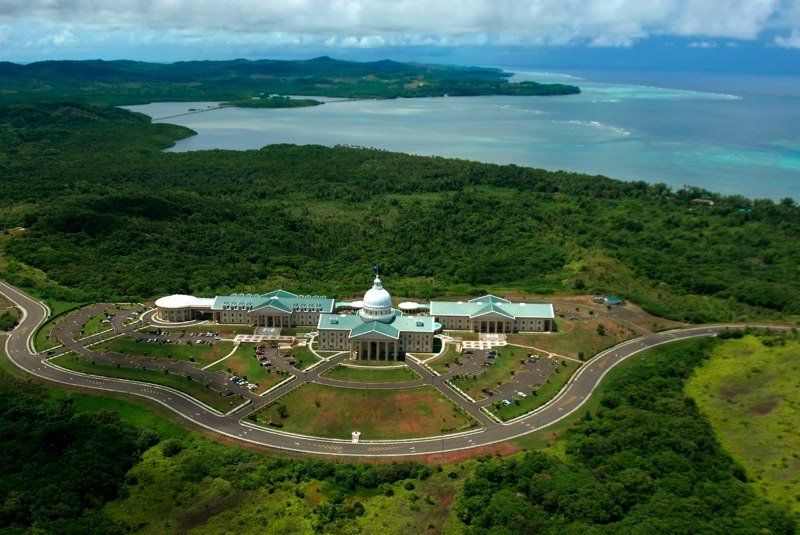
Melekeok: Capital City Profile
Monetary unit: U.S. dollar used
National name: Beluu er a Belau
Languages: Palauan 66.6%, English 15.5%, Sonsoralese, Tobi, Angaur (each official on some islands), Filipino 10.8%, Chinese 1.8%, Carolinian 0.7%, other Micronesian 0.7%, other Asian 2.6%, other languages 1.3% (2005)
Ethnicity/race: Palauan (Micronesian with Malayan and Melanesian admixtures) 72.5%, Filipino 16.3%, Chinese 1.6%, other Asian 3.4%, white 0.9%, Carolinian 1%, Vietnamese 1.6%, other Micronesian 2.4%, other or unspecified 0.3% (2005 census)
Religions: Roman Catholic 49.4%, Protestant 30.9%, Modekngei 8.7% (indigenous), Seventh-Day Adventist 5.3%, Jehovah's Witness 1.1%, other religion 8.8%, unspecified or none 1.1% (2005 census)
National Holiday: Constitution Day, July 9

Background:
After 47 years as part of the UN Trust Territory of the Pacific Islands (TTPI), under US administration, Palau (Belau) opted for independence in 1978 rather than join the Federated States of Micronesia. A Compact of Free Association with the US was approved in 1986, but not ratified until 1993. It entered into force the following year, when the islands gained independence.
Country Map
COUNTRY MAP WITH STATES/PROVINCES BOUNDARIES CLICK HERE

Source of Information:


