Yangon Weather
RANGOON WEATHERAbout Yangon
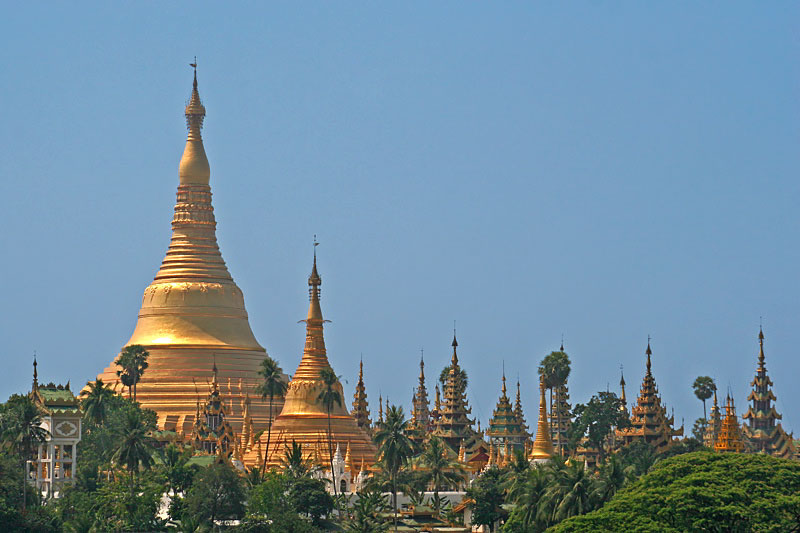
Yangon — known as Rangoon during the British colonial era — is Myanmar's largest city, its commercial and cultural heart, and one of the most visually extraordinary cities in Southeast Asia: a metropolis of 5.4 million people where the towering gold of the Shwedagon Pagoda rises above a skyline of crumbling colonial grandeur, tropical vegetation erupting from every wall and rooftop, Buddhist monks in saffron robes moving through market streets alive with incense, jasmine garlands, and the ceaseless commerce of a city that feels genuinely and profoundly itself. Unlike Bangkok, Singapore, or Kuala Lumpur, Yangon has not been swept clean by modernisation — the city retains its layered historical character with extraordinary completeness: downtown Yangon contains the finest and most intact collection of colonial-era architecture in Southeast Asia (over 200 listed colonial buildings from the British era, when Rangoon was one of the great cities of the British Empire), a Chinatown of authentic vitality, Indian quarter temples and mosques, and Buddhist pagodas of every scale rising above the dense urban canopy. Naypyidaw has been the official administrative capital since 2006, but Yangon remains Myanmar's undisputed economic, cultural, and spiritual capital — the city that holds the country's heart, anchored by the golden spire of Shwedagon that has glittered above the Yangon skyline for over 2,500 years.
Best Time to Visit Yangon & Weather Guide
Yangon has a tropical monsoon climate with three distinct seasons — cool dry, hot dry, and wet monsoon — making season selection important for visitor comfort.
🌤️ Cool Dry Season (November–February)
The finest and most comfortable time to visit — temperatures of 25–32°C with low humidity and minimal rainfall create ideal conditions for exploring Yangon's temples, markets, and colonial downtown on foot. December and January are the most pleasant months: clear skies, cooling northeast breezes, and the city at its most vibrant and accessible. The cool dry season is the peak of Myanmar's tourism calendar — accommodation prices are higher and popular sites are busiest, but the conditions for sightseeing are simply far superior to any other time of year. Shwedagon Pagoda at sunset and dawn in the dry-season clear light is one of the most magnificent sights in Southeast Asia.
Best Time to Visit☀️ Hot Dry Season (March–May)
Yangon's most demanding season — temperatures climb to 35–40°C by April and May, with high humidity making outdoor sightseeing genuinely challenging during midday hours. Thingyan — the Burmese Water Festival (typically mid-April) — is the most joyous and spectacular public celebration in Myanmar: the country's traditional New Year is celebrated with four days of citywide water-throwing, music, dancing, and communal festivity that makes Yangon's streets an unforgettable spectacle of colour and chaos. If visiting during Thingyan, embrace getting soaked entirely — all clothing will be destroyed and all social conventions temporarily suspended in the best possible way.
Hot / Thingyan Festival🌧️ Monsoon Season (June–October)
The Southwest Monsoon arrives in Yangon in late May or early June — bringing heavy daily rainfall (Yangon averages 2,500mm of annual rain, most falling June–October), high humidity, and the transformation of the city's tropical vegetation into an intense, dripping green. The monsoon is low season for tourism — accommodation prices are at their lowest and the city is uncrowded. Yangon's colonial buildings, temples, and markets take on an atmospheric, rain-soaked beauty that is quite different from the dry season experience. September and October see the monsoon begin to ease. The full Buddhist Lent period (Vassa / Buddhist Rains Retreat) falls during the monsoon, ending with the dazzling Thadingyut Festival of Lights in October.
Monsoon / Low Season🎆 Festival Highlights
Myanmar's extraordinarily rich Buddhist festival calendar provides year-round highlights. Thadingyut (Festival of Lights, October full moon) — the end of Buddhist Lent — illuminates Yangon's pagodas, streets, and homes with candles, lanterns, and electric lights in one of the most beautiful festival spectacles in Southeast Asia. Tazaungdaing (Festival of Lights, November) follows one month later with a similar atmosphere. Thingyan Water Festival (April) is the most exuberant public celebration. Shwedagon Festival (February–March full moon) draws pilgrims from across Myanmar to the great pagoda for one of the country's most important religious gatherings. Any of these festivals — if the timing aligns — is worth planning an entire trip around.
Festival CalendarCool Dry Season (Nov–Feb): Lightweight, breathable clothing for warm days (25–32°C). A light layer for air-conditioned restaurants and cars — Myanmar's interior cooling can be aggressive. Modest clothing is essential for all pagoda and temple visits: shoulders must be covered, knees covered (below knee for women), and shoes and socks removed at all pagoda entrances. Carry a small bag for shoes when visiting multiple temples. Flip-flops or slip-on shoes are far more practical than laced footwear for a temple-heavy itinerary.
Hot Season (Mar–May): The lightest possible clothing, maximum sun protection (SPF 50+, hat, UV-protective sunglasses). Start all outdoor sightseeing before 10am and retreat to air-conditioned spaces 11am–3pm. Stay extremely well hydrated — heat exhaustion risk is real at 40°C.
Monsoon (Jun–Oct): Quick-dry clothing, a compact umbrella or waterproof jacket for the daily downpours. Waterproof sandals for navigating flooded streets. Embrace the rain — it passes quickly and the city is beautiful in the wet.
Year-round: Insect repellent (mosquitoes are active particularly at dawn and dusk). USD cash in good condition (Myanmar banks exchange crisp, unmarked USD notes only — worn or marked notes are rejected). A power bank — power cuts are common in Yangon outside the main hotels.
Top Attractions in Yangon
Yangon's attractions combine the sacred and the colonial in a way found nowhere else in Southeast Asia — ancient pagodas of staggering beauty alongside the finest concentration of Victorian and Edwardian architecture outside Britain.
🏛️ Shwedagon Pagoda
The most sacred Buddhist site in Myanmar and one of the most magnificent religious monuments in the world — Shwedagon Pagoda (Shwedagon Zedi Daw — "Glorious Golden Pagoda") is a 99-metre solid-gold stupa encrusted with 5,448 diamonds, 2,317 rubies, and over 1,000 other precious and semi-precious stones at its crown, rising from Singuttara Hill above Yangon and visible across the city as a permanent beacon of gold. The pagoda's legend claims it is 2,500 years old (though historians date the current structure to the 14th–15th centuries) and that it enshrines eight hairs of the Gautama Buddha alongside relics of three previous Buddhas. The vast platform surrounding the central stupa — covered in subsidiary shrines, prayer halls, bell towers, planetary posts, and the constant activity of devotion — is the finest example of living Buddhist sacred architecture in Southeast Asia. Visit at both dawn and sunset if possible — the light transforms the golden surface completely at each hour.
Essential — World Heritage🏙️ Downtown Colonial Quarter
The most intact collection of colonial-era architecture in Southeast Asia — Yangon's downtown grid of streets (particularly Strand Road, Merchant Street, Sule Pagoda Road, and Mahabandoola Road) preserves over 200 Victorian and Edwardian buildings from the British colonial era, when Rangoon was one of the most prosperous and architecturally ambitious cities in the empire. The Strand Hotel (1901, lovingly restored), the High Court (1905, red brick Gothic), the General Post Office, the Secretariat Building (where independence leader Aung San was assassinated in 1947), and hundreds of crumbling, vegetation-draped apartment buildings and commercial warehouses create a streetscape of extraordinary historical depth and melancholy beauty. The Yangon Heritage Trust has mapped and documented this irreplaceable architectural legacy.
Architectural Marvel🕌 Sule Pagoda
Yangon's most centrally located and historically significant pagoda — Sule Pagoda, a 48-metre golden stupa that stands at the geographic centre of the colonial downtown grid (the British city planners built their street layout around the existing pagoda), is believed to be over 2,000 years old and to enshrine a hair relic of the Buddha. The pagoda's perfect octagonal form rising from a traffic roundabout in the heart of the commercial district — surrounded by the Victorian facades of the colonial city — creates one of the most striking urban contrasts in Asia. The pagoda is an active place of pilgrimage and fortune-telling at every hour of the day and night, and observing the activity of devotees around its base is one of the finest windows into everyday Burmese Buddhist practice.
City Centrepiece🌿 Kandawgyi Lake & Botanical Gardens
Yangon's most beautiful natural respite — Kandawgyi Lake (Royal Lake), set in the heart of the city below Shwedagon Hill, reflects the golden spire of the great pagoda in its waters at dawn and dusk, creating one of the most photographed reflections in Myanmar. The lake's eastern shore is occupied by Kandawgyi Nature Park — a pleasant lakeside park with a wooden boardwalk, the elaborate Karaweik Palace (a concrete reproduction of a royal barge, now a restaurant) rising from the water on the eastern bank, and the most peaceful walking in central Yangon. The adjacent Hluttaw Gardens (formerly Rangoon Zoological Gardens) provide shade and tranquility in the tropical heat.
Lake Views🏪 Bogyoke Aung San Market (Scott's Market)
Yangon's most beloved and historically significant market — Bogyoke Aung San Market (known to generations as Scott's Market after its British founder), a vast covered bazaar built in 1926 in an Indo-Saracenic architectural style, is the finest place in Myanmar to purchase traditional crafts, gems, lacquerware, silk longyi fabric, and jade. The market's hundreds of stalls — arranged in covered avenues of extraordinary variety — sell Burmese rubies, sapphires, and jade of every quality (from tourist pieces to investment-grade stones), hand-painted lacquerware from Bagan, traditional puppets, silver jewellery, and the most beautiful woven silk and cotton textiles in Southeast Asia. The market building itself is a magnificent piece of colonial architecture — one of the finest surviving examples of the Indo-Saracenic style in the region.
Best Shopping🍜 Chinatown & Indian Quarter
The most vibrant and gastronomically rewarding neighbourhoods in Yangon — Chinatown (centred on Latha Street and Lanmadaw) is one of the most authentic Chinese commercial districts in Southeast Asia: covered arcades of gold shops, dried seafood merchants, Chinese medicine halls, and dim sum teahouses operating from before dawn; the night market that transforms the streets from 6pm with hundreds of food stalls, lantern light, and the smell of garlic frying in hot woks. The adjacent Little India district (around Shri Kali Temple on 26th Street) brings the curry houses, flower garland sellers, and mosques of Yangon's substantial Indian community — a legacy of the British practice of bringing Indian labourers and merchants to Burma — creating a multicultural commercial quarter of extraordinary sensory intensity.
Street Food Heaven🏯 Chaukhtatgyi Buddha Temple
One of the most impressive and least-visited Buddhist sites in Yangon — the Chaukhtatgyi Buddha Temple (also written Chauk Htat Gyi) houses a 65-metre reclining Buddha figure of extraordinary craftsmanship: the Buddha's elaborate lacquered feet are covered in 108 auspicious symbols inlaid in mother-of-pearl, the face is of serene and almost startling beauty, and the construction of the corrugated-iron shed that houses this colossal figure — a basic industrial structure containing one of the most refined Buddhist artworks in the country — creates a uniquely Burmese contrast between the sacred and the practical that is very characteristic of Yangon's religious landscape.
Sacred Art🚂 Yangon Circular Train
The finest and most affordable urban journey in Southeast Asia — the Yangon Circular Railway, a colonial-era 45.9km loop around the city operating vintage carriages from the 1950s at walking pace through Yangon's inner suburbs, outer neighbourhoods, and rural market villages at a fare of approximately 200–500 kyat (less than $0.20), provides an extraordinary 3-hour window into everyday Yangon life: vendors boarding and alighting at every station, monks travelling between monasteries, market traders with enormous baskets of produce, children doing homework in the wooden-slatted carriages, and the full social panorama of a Burmese city moving at the pace of an earlier century. One of the great railway journeys in Asia — not for the destination but for the journey itself.
Unmissable ExperienceLocal Food Recommendations
Burmese cuisine is one of Southeast Asia's great undiscovered culinary traditions — a sophisticated, ingredient-rich cooking style drawing on Indian, Chinese, and indigenous Bamar influences to produce dishes of remarkable complexity and depth, anchored by the extraordinary fermented fish paste ngapi that underlies almost all Burmese cooking.
🍲 Must-Try Burmese Dishes
- Mohinga — Myanmar's national dish and the most universally eaten breakfast in the country: a rich, aromatic fish broth (made from catfish, lemongrass, ginger, garlic, and shallots, thickened with toasted rice flour and banana stem) served over rice vermicelli noodles and topped with crispy fried split pea fritters (pe kyaw), sliced hard-boiled egg, coriander, and fish sauce. Mohinga is available from street vendors throughout Yangon from 5am onwards — eaten standing at mobile carts or in the covered teashops of the downtown streets. The combination of the rich, savoury broth with the delicate rice noodles and the crisp fritters is deeply satisfying and quintessentially Burmese — a breakfast of genuine complexity and cultural significance. The finest mohinga in Yangon is consistently found at the most crowded mobile carts rather than in restaurants.
- Laphet thoke (tea leaf salad) — the most distinctive and nationally beloved dish in Myanmar and one of the finest salads in Asian cuisine: fermented tea leaves (lahpet) — pickled for months in sealed containers until they develop an intense, earthy, slightly bitter complexity — mixed tableside with fried garlic, toasted sesame, fried split peas, peanuts, dried shrimp, tomatoes, and lime juice. The combination of textures (crunchy, soft, crispy) and flavours (fermented, acidic, nutty, savory) is utterly unlike anything else in Southeast Asian cooking. Lahpet is simultaneously a food, a ritual, and a social bond in Burmese culture — the offer of lahpet traditionally symbolises reconciliation and goodwill. Available at every traditional Burmese restaurant in Yangon.
- Shan noodles — the most popular noodle dish in Yangon from the Shan State ethnic minority: flat rice noodles served either in a tomato-based broth with chicken or pork, tofu, and fermented soybean garnish, or "dry" style (shan khauk swè) with the broth served separately and a dressing of sesame oil, garlic, and light soy. The Shan noodle shops of Yangon — identifiable by the large flat noodle boards displayed in their windows — are considered by many food writers to serve the finest everyday noodle dish in Myanmar, and at $1–2 per bowl represent extraordinary value.
- Nan gyi thoke — Yangon's most beloved local noodle dish: thick round rice noodles (nan gyi) mixed with a rich, coconut-milk curry sauce of chicken or pork, dressed with sliced fish cake, hard-boiled egg, fried garlic, coriander, dried chilli, and lime. Unlike mohinga (which is a soup), nan gyi thoke is a dry, mixed noodle dish of great complexity — the layers of flavour from the coconut curry sauce, the various crunchy garnishes, and the fresh lime creating a balance of sweetness, sour, spice, and savoury that is definitively Burmese. Available at specialist nan gyi shops throughout downtown Yangon from early morning.
- Mont lin maya (quail egg pancakes) — Yangon's most beloved street snack and one of the finest street foods in Southeast Asia: a small, round two-compartment iron griddle filled with rice batter — one side topped with a quail egg, the other with shrimp paste, spring onion, and dried prawn — cooked until crispy on the outside and soft within, then flipped together to create a two-sided dumpling of extraordinary flavour. Available from mobile carts and night market stalls throughout Yangon from late afternoon, mont lin maya costs $0.20–0.30 per piece and requires a minimum of 6–8 to constitute a satisfying snack.
- Burmese curry (hin) — the formal Burmese meal consists of a generous spread of dishes: a main curry (fish, chicken, pork, or mutton, cooked in oil until the fat separates and the protein is tender — the characteristic "dry" Burmese curry technique), alongside a clear soup (hin gyo), fermented fish paste condiment (ngapi yay), fresh and cooked vegetable sides, and unlimited rice. Traditional Burmese restaurants in Yangon serve this full spread as a set meal for $3–8 — one of the finest and most affordable full-meal experiences in Southeast Asia.
☕ Drinks & Street Food
- Lahpet yay (Burmese tea shop culture) — Yangon's teashop culture is one of the most vibrant and socially important institutions in the city: the traditional Burmese teashop (lahpet yay hsaing), typically a crowded, low-ceilinged room of small plastic tables and stools, serves strong, sweet, condensed-milk-enriched tea alongside a free rotation of small snacks (fried dough, steamed buns, samosas). The teashop is the centre of male social life in Yangon — the place where business is conducted, politics debated, football discussed, and the day's events processed over successive rounds of sweet tea. A morning in a Yangon teashop, watching the city's conversations unfold, is one of the finest and most authentic Southeast Asian urban experiences available.
- Myanmar Beer and craft scene — Myanmar Beer (the dominant national lager, cold and light) is the default beverage at every restaurant and street food stall in the country. Mandalay Beer (slightly fuller) and the premium Andaman Gold are alternatives. A small but growing craft beer scene in Yangon's downtown — particularly at the bars around 19th Street — produces a handful of interesting local brews. Beer is served ice-cold everywhere and is the universal social lubricant at Yangon's night market and street food stalls.
- 19th Street barbecue strip — Yangon's most famous and enjoyable evening food destination: a single block of 19th Street in Chinatown that transforms every evening from around 5pm into a dense corridor of charcoal barbecue stalls, plastic chairs, cold beer towers, and the intoxicating smoke of skewered pork intestines, chicken wings, corn cobs, and tofu grilling over hot charcoal. The communal, smoky, slightly chaotic atmosphere of 19th Street — where Yangon's Chinese, Burmese, and international communities share tables and grills in complete democratic ease — is one of the finest street food experiences in Southeast Asia.
- Sugarcane juice and fresh tropical drinks — Yangon's street corners are lined with freshly pressed sugarcane juice vendors (the long green stalks pressed through rollers to produce a pale green, intensely refreshing drink at $0.30–0.50), fresh coconut water hawked from mobile carts, and the extraordinary shwe yin aye — the definitive Burmese summer dessert drink: a glass of coconut milk with sticky rice, tapioca pearls, coconut jelly, and bread, served over ice in a combination of sweet, creamy richness and cool refreshment perfectly designed for the Yangon heat.
- Chinatown night market — from 6pm nightly, the streets of Yangon's Chinatown (particularly Latha and Anawrahta Streets) fill with food stall operators: grilled skewers, wok-fried noodles, dim sum, mohinga carts, fresh fruit, and the extraordinary range of Chinese-Burmese fusion street food that reflects Yangon's multicultural food heritage. The night market is the finest and most atmospheric outdoor dining experience in the city — arrive hungry and plan to eat from multiple stalls across 2–3 hours.
🍽️ Where to Eat — Local Tips
- Mohinga carts (downtown, 5–10am) — the finest mohinga in Yangon is at the most crowded mobile carts around the downtown market area (particularly near the corner of Mahabandoola and Pansodan Streets) from 5–10am. Arrive early — the best vendors sell out by 9am. Standing at a mobile cart eating mohinga alongside Yangon's office workers, monks, and market traders is the most authentically Burmese morning experience available.
- Feel Myanmar Food — Yangon's most celebrated traditional Burmese restaurant: a large, cheerful family restaurant in a colonial building serving the full traditional set-meal spread — main curry, soup, ngapi condiments, and unlimited rice — at $5–8 per person. Consistently recommended by visitors and residents as the finest accessible introduction to the full range of Burmese cuisine. The lahpet thoke (tea leaf salad) and the pork belly curry are the standout dishes.
- Shan noodle shops (Shan Yoe Yar) — the best Shan noodles in Yangon are at the specialist Shan noodle shops in the downtown area, particularly Shan Yoe Yar restaurant on Shwedagon Pagoda Road: full Shan cuisine including the famous noodles, Shan-style tofu, and the excellent nga htamin (turmeric fish rice) at $2–5 per dish in a comfortable, English-menu environment.
- 19th Street barbecue (Chinatown, evenings) — the essential Yangon evening experience: arrive at 19th Street around 6pm, claim a table (or share one — sharing is the norm), order a tower of beer, select skewers from the passing vendors, and eat in the warm, smoky, gloriously chaotic atmosphere of one of Southeast Asia's finest street food streets. Budget $5–10 per person for a full evening including multiple rounds of drinks and food.
- Strand Hotel (Sunday brunch) — for a contrast to the street food scene, the colonial-era Strand Hotel's Sunday buffet brunch is one of the finest and most atmospheric dining experiences in Yangon: high ceilings, slow ceiling fans, a perfectly restored 1901 interior, and an extensive spread of both Burmese and international dishes in a setting that transports guests completely to the grandeur of colonial Rangoon. Reserve in advance.
🌿 Burmese Craft & Cultural Heritage
- Myanmar's most celebrated traditional craft is lacquerware — a tradition of extraordinary refinement practised primarily in Bagan (Myanmar's ancient temple city) for over a thousand years: bamboo or horsehair coiled vessels covered in layer after layer of natural lac resin, carved and painted with floral, figurative, and geometric designs of great intricacy. The finest lacquerware — a single piece requiring 6 months of patient layering, carving, and polishing — is among the most technically accomplished craft objects in Southeast Asia. Available at Bogyoke Market and the specialist lacquerware shops of downtown Yangon at prices ranging from $5 tourist pieces to $500+ for museum-quality works.
- Burmese gems and jade — Myanmar is the world's largest producer of rubies and a major source of sapphires, spinels, and jade. The gem shops of Bogyoke Market sell stones ranging from tourist-grade to investment-quality, and the government-certified gem dealers of central Yangon are among the most reputable in the Asian gem trade. Myanmar jade (kyauksein) — the finest imperial-grade green jadeite — is among the most valuable gemstones in the world. Uninformed purchasing of gems carries significant risk — use only certified dealers and obtain authentication certificates for any serious purchase.
- Longyi (traditional woven fabric) — the longyi, a tube of woven cotton or silk worn wrapped around the waist as the everyday dress of both men and women throughout Myanmar, is produced in extraordinary variety across the country's diverse weaving traditions. The finest longyis — silk-wefted, hand-woven, with intricate patterns specific to particular ethnic groups and regions — are available at Bogyoke Market and at specialist textile shops throughout Yangon. A well-chosen longyi is both the most practical and most distinctively Burmese souvenir available.
- The Burmese marionette puppet tradition (yama zatpwe) — once the highest form of performing art at the Burmese royal court, declining but maintained by a small number of dedicated master puppeteers — produces among the most elaborate and technically demanding traditional puppets in Asia: jointed marionettes of great beauty in royal court costume, manipulated by 18 strings with extraordinary dexterity. Antique and contemporary puppets are available at Bogyoke Market, and puppet performances can be arranged through specialist cultural organisations in Yangon.
Day Trip Itineraries from Yangon
Yangon serves as the gateway to Myanmar's greatest destinations — multi-day excursions to the ancient temple cities, river towns, and beach coasts that make Myanmar one of Southeast Asia's most compelling travel experiences:
🏯 Multi-Day: Bagan — Ancient Temple City
Travel time: 1.5-hour domestic flight or 9–10 hours overnight bus | Cost: ~$50–80 return by air; ~$15–20 by overnight bus
One of the great archaeological landscapes of the world — Bagan, the ancient capital of the Pagan Empire (9th–13th centuries), contains over 3,000 surviving Buddhist temples, stupas, and monasteries spread across a 40km² plain on the bank of the Irrawaddy River, creating the most visually overwhelming concentration of ancient religious architecture in Southeast Asia. The signature experience — watching the sunrise or sunset over the Bagan plain from a temple top as the mist rises from the river and the red-brick spires emerge in the morning light — is among the most transcendent travel moments available anywhere in Asia. A minimum 2-night stay is strongly recommended.
Unmissable🌊 Day Trip: Thanlyin & Kyauktan Pagoda
Travel time: 30–45 minutes by taxi or ferry | Cost: ~$15–20 return by taxi
The most accessible and characterful half-day excursion from Yangon — Thanlyin (formerly Syriam), across the Bago River from Yangon, was once a major Portuguese and Dutch trading port and retains colonial and religious buildings of great interest. The jewel of the excursion is Kyauktan Ye Le Pagoda — a beautiful golden pagoda situated on a small island in the middle of the Bago River, accessed by small wooden boat, surrounded by enormous and remarkably tame catfish fed by pilgrims. The combination of the river crossing, the island pagoda, and the catfish-feeding ritual creates one of the most charming half-day experiences available from the capital.
Charming Half-Day🏖️ Multi-Day: Ngwe Saung & Chaungtha Beaches
Travel time: 5–6 hours by bus | Cost: ~$8–15 by bus; beach resorts from $30–80/night
Myanmar's most accessible Pacific beaches from Yangon — Ngwe Saung ("Silver Beach", 5.5 hours northwest) and Chaungtha (5 hours northwest) are the closest beach resorts to Yangon: long stretches of white sand, warm Bay of Bengal water, fresh seafood restaurants, and a quiet, undeveloped character that provides complete contrast to the city's intensity. Ngwe Saung (the more upscale of the two) has seen significant resort development and is the preferred choice for mid-range visitors. Both beaches are at their best November–April (dry season) — the monsoon makes swimming dangerous from May to October.
Beach Escape🏔️ Multi-Day: Inle Lake — Highland Serenity
Travel time: 1.5-hour domestic flight to Heho + 1.5 hours by road | Cost: ~$60–90 return by air; lake tours from $15–25/day
One of the most beautiful and peaceful destinations in Southeast Asia — Inle Lake in the Shan State highlands (900 metres elevation, refreshingly cool) is a vast, calm shallow lake where the famous Intha leg-rowers propel their narrow wooden boats standing on one leg while wrapping the other around the oar — a unique technique developed to see above the lake's floating vegetation. The lake's floating gardens (vegetables grown on artificial islands of mud and aquatic weed), the stilted lakeside villages, the weavers working at traditional Shan silk looms, and the Buddhist monasteries accessible only by boat create a world of extraordinary tranquility and beauty.
Highland BeautyTourist Tips for Yangon
🚌 Getting Around
- Yangon's main visitor attractions — Shwedagon Pagoda, downtown colonial quarter, Sule Pagoda, Bogyoke Market, Chinatown, and Kandawgyi Lake — are spread across a walkable central area. Shwedagon is about 3km north of the downtown core — a comfortable walk in the cool season but best reached by taxi in the hot season or at night.
- Taxis — the primary transport for visitors in Yangon: widely available, air-conditioned, and inexpensive by regional standards. Always negotiate the fare before departure (typical central city fares: $2–5; to Shwedagon from downtown $2–3; to the airport $8–12). The Grab app (Southeast Asia's equivalent of Uber) operates in Yangon with transparent metered pricing — the most reliable and fairly-priced option for all journeys.
- The Yangon Circular Railway is not practical for getting between specific tourist sites (it's slow and stops everywhere) but is an outstanding 3-hour experience in its own right — buy a full-circle ticket ($0.15–0.40) and ride the entire loop for one of the finest urban railway journeys in Asia.
- City buses operate on a basic network covering the main routes — very affordable ($0.05–0.10) but crowded, without air conditioning, and requiring local knowledge. Practical for longer cross-city distances in the cool season but not recommended for visitors in the heat.
- For domestic travel to Bagan, Inle Lake, and Mandalay: book domestic flights through local travel agencies or at the airport. Myanmar National Airlines, Air KBZ, and Flymya operate the main domestic routes. Book at least 1–2 weeks in advance in peak season (Nov–Feb).
💡 General Safety & Travel Tips
- Yangon is generally safe for tourists in the main visitor areas — petty crime is lower than in most regional capitals and locals are genuinely hospitable to visitors. The main practical concerns are traffic (chaotic but slow), the heat (manage with early morning starts and midday rests), and occasional power cuts. As noted in the cultural highlight box above, check government travel advisories before travel given Myanmar's ongoing political situation.
- Myanmar Kyat (MMK) is the local currency. Myanmar operates a largely cash economy — card acceptance is limited even in Yangon's better hotels and restaurants. USD is accepted as a secondary currency at many hotels and larger businesses, but only in crisp, clean, unfolded notes — even minor marks or folds cause USD to be rejected. Exchange USD to MMK at airport exchange counters or bank exchange desks (better rates than hotels). ATMs are available in central Yangon but may have connectivity issues.
- Most nationalities require a tourist e-visa for Myanmar — apply online at the official Myanmar e-visa portal at least 3 days before travel. The tourist visa is valid for 28 days single entry. Citizens of some ASEAN countries have separate visa arrangements. Note: Myanmar's e-visa system has experienced disruptions since the 2021 coup — verify current status through official channels and your country's embassy before travel.
- Temple etiquette: remove shoes and socks at all pagoda and temple entrances (this is a firm and universally enforced rule — there are no exceptions). Dress modestly with covered shoulders and knees — sarongs are available for hire at the entrances of major pagodas. Never point your feet toward a Buddha image or a monk. Do not touch monks or hand objects directly to them (women in particular must never touch a monk).
- Myanmar uses 230V/50Hz electricity with a mixture of two-pin and three-pin British-style sockets. A universal adapter is useful. Power cuts are frequent outside major hotels — a power bank is essential for phone charging.
Apply for Tourist Visa
Most nationalities require a tourist e-visa for Myanmar, valid for 28 days single entry — apply online through the official Myanmar e-visa portal at least 3 days before travel. The e-visa fee is $50 USD. Citizens of some ASEAN countries have visa-free or visa-on-arrival arrangements. Note: Myanmar's visa and entry systems have been subject to change since the 2021 military coup — always verify current requirements through your country's embassy or the official Myanmar immigration portal before booking travel. Apply for Myanmar e-Visa
Important Emergency Numbers
🇲🇲 Yangon Emergency Contacts
- 🚑 Ambulance: 199
- 🔥 Fire Brigade: 191
- 👮 Police: 192
- 📞 General Emergency: 999
International Emergency Phone Numbers
Find Flights to Yangon (Rangoon)
Yangon Airport Code: RGN — Yangon International Airport (also known as Mingaladon Airport), located approximately 19km north of downtown
Airport Transfer: Taxis from Yangon International Airport to downtown take approximately 30–45 minutes ($8–12 by Grab app or negotiated taxi). Airport buses also operate on a few central routes at very low cost (~$0.50) but are slow and crowded. International connections from Yangon include direct flights to Bangkok (Thai Airways, Bangkok Airways, Myanmar Airlines), Singapore (Singapore Airlines), Kuala Lumpur (AirAsia, Malindo), Guangzhou, Chengdu, Kunming (multiple Chinese carriers), Dubai (Flydubai), and Tokyo. The majority of European visitors route via Bangkok or Singapore — both offer excellent connection options to Yangon with journey times of 1.5–3 hours from either hub.
International Airport FinderCurrency in Yangon
The currency of Myanmar is the Myanmar Kyat (MMK). Myanmar operates a largely cash economy — carry sufficient MMK for markets, street food, taxis, and smaller establishments. USD is accepted at many hotels and larger businesses but only in crisp, unfolded, unmarked notes — any marks, folds, or wear will cause USD to be refused. Exchange at airport bank desks or central Yangon exchange counters. ATMs are available in central Yangon but may have connectivity issues. Do not exchange currency on the black market — official exchange rates are broadly competitive and the risks are not worth it.
Yangon Streets Map
BOOK THE BEST TOURS
Naypyidaw is the official capital; Yangon (Rangoon) is the largest city and commercial capital of Myanmar.
Myanmar Country Profile