
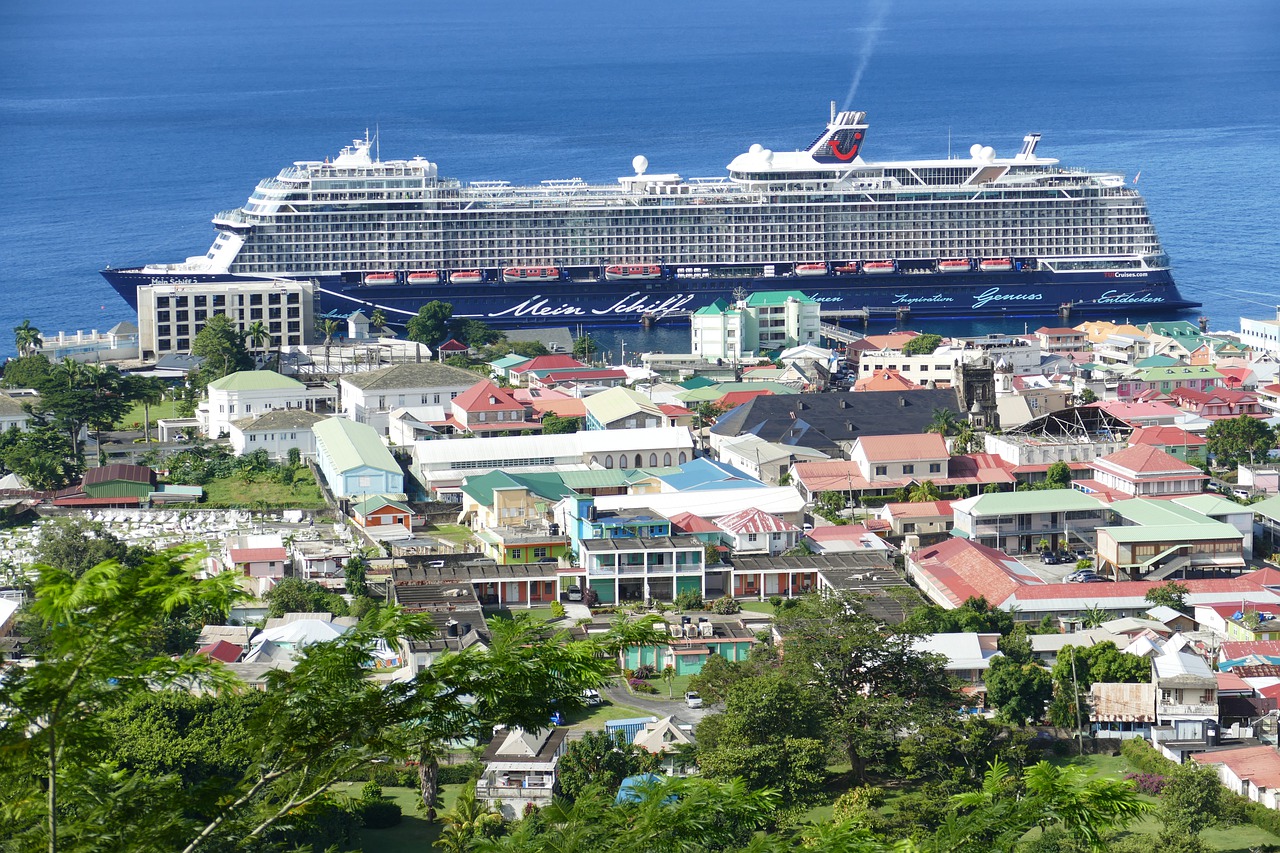
Roseau
The small but characterful capital of Dominica — the "Nature Isle of the Caribbean" — Roseau sits at the mouth of the Roseau River on the island's leeward southwest coast, backed dramatically by the mist-shrouded volcanic mountains of the interior. Unlike its glitzier Caribbean neighbours, Roseau offers an authentic, unhurried West Indian town experience: colonial wooden architecture, vibrant Saturday markets, warm Creole culture, and immediate access to some of the most extraordinary tropical nature in the entire Caribbean.
City at a Glance
About Roseau
Roseau is the capital and largest settlement of the Commonwealth of Dominica — a volcanic island nation in the Lesser Antilles of the Eastern Caribbean, situated between the French islands of Guadeloupe to the north and Martinique to the south. With a population of just 16,600, Roseau is one of the smallest capital cities in the world, yet it serves as the administrative, commercial, and cultural heart of an island that punches extraordinarily far above its weight in terms of natural beauty and ecological significance. The city was established by French colonists in the early 18th century — its name derives from the French word for reed grass (roseau), which grew abundantly along the river mouth — and its historic core retains a charming mix of French Creole and British colonial wooden architecture that gives it a uniquely Caribbean character.
Dominica is known throughout the Caribbean as the "Nature Isle" — and Roseau is the gateway to one of the most extraordinarily biodiverse and unspoiled tropical environments in the Atlantic. Within an hour of the capital lie boiling volcanic lakes, ancient rainforest, UNESCO World Heritage-listed national parks, hundreds of rivers and waterfalls, hot spring pools, spectacular diving and snorkelling sites, and the territory of the Kalinago people — the last remaining pre-Columbian indigenous community in the Eastern Caribbean. Roseau itself is a friendly, relaxed town where the Saturday morning market at the Old Market Plaza and the colourful waterfront are the beating heart of daily West Indian life.
Best Time to Visit & Weather
Dry Season Best Time
February – April. The driest and most pleasant months to visit Roseau and Dominica. Temperatures are warm (24–29 °C / 75–84 °F), trade winds keep the humidity comfortable, and rainfall is at its lowest. Hiking trails are at their most accessible, waterfalls are flowing but not dangerously full, and the island is at its most visitor-friendly. The peak of Dominica's ecotourism season — book accommodation well ahead, especially for the Boiling Lake hike.
Winter Season Good Value
December – January. Warm and relatively dry, with temperatures of 23–28 °C. The Christmas and New Year period brings Dominica's wonderful Creole cultural season to life — the World Creole Music Festival (held in late October/early November) just precedes this window, but the Christmas street parties, masquerade traditions, and New Year celebrations in Roseau are among the most authentic in the Caribbean. Generally quieter and more affordable than peak February–April.
Hurricane Season
June – November. Dominica sits firmly in the Atlantic hurricane belt and has been severely affected by hurricanes in recent years — most devastatingly by Hurricane Maria in September 2017. The June–November period brings heavy rainfall, high humidity, and genuine hurricane risk. September and October are the most dangerous months. Travel insurance with hurricane cancellation cover is essential. The island remains open and operational but some trails and facilities may be affected.
Festival Season Cultural Highlight
October – November. The most culturally vibrant time to visit Roseau — the World Creole Music Festival (late October/early November) draws artists from across the Caribbean, West Africa, and the Creole diaspora for three nights of extraordinary music in the valley behind Roseau. Independence Day (November 3rd) celebrations fill the town with colour, costume, and Dominican pride. The Creole cultural energy of Dominica at this time is unmissable.
- Dominica has no large international airport — the main airport (Douglas-Charles/Melville Hall, DOM) is a small regional airport served by inter-Caribbean airlines from Barbados, Puerto Rico, Antigua, and other hubs. Most visitors fly via Barbados, Antigua, or St Maarten. A new international airport is under construction.
- The Boiling Lake hike in Morne Trois Pitons National Park is one of the greatest day hikes in the Caribbean — a strenuous 6–7 hour return through spectacular volcanic landscapes to the world's second-largest boiling lake. A certified guide is mandatory and should be arranged in Roseau the day before.
- Dominica uses the East Caribbean Dollar (XCD), fixed at 2.70 XCD to 1 USD. US dollars are widely accepted throughout Roseau and the island. Credit cards are accepted at hotels and larger restaurants; cash is essential for markets and smaller establishments.
- Roseau is an extremely walkable town — the historic centre, waterfront, market, botanical gardens, and main restaurants are all within easy walking distance. Minibus taxis (shared vans) are the primary transport for reaching the rest of the island.
- Dominica is the wettest island in the Caribbean — a light rain jacket or poncho is essential year-round, even in the dry season. The interior can receive over 6,000 mm of rain annually. Rain showers are typically brief and the sun returns quickly.
Top Attractions
Boiling Lake — Morne Trois Pitons
The crown jewel of Dominica's volcanic landscape — the Boiling Lake in the UNESCO World Heritage-listed Morne Trois Pitons National Park is the second-largest boiling lake in the world, a cauldron of grey-blue turbulent water perpetually heated by volcanic gases to near-boiling temperature. The 6–7 hour return hike through the Valley of Desolation's steaming fumaroles and sulphur vents is the most spectacular and demanding day hike in the Eastern Caribbean. A mandatory certified guide is arranged in Roseau.
Trafalgar Falls
The most accessible and spectacular waterfall in Dominica — Trafalgar Falls, just 8 km from Roseau in the Roseau Valley, consists of two dramatic side-by-side waterfalls (the "Father" and "Mother" falls) plunging into pools that are heated by volcanic springs. The short trail from the visitor centre leads to a viewing platform and then down to the pools — where bathing in the warm mineral-rich water at the base of the falls is one of Dominica's most memorable experiences.
Roseau Market & Old Market Plaza
The heart of Dominican street life — Roseau's Saturday morning market at the waterfront market area is one of the most vibrant and authentic produce markets in the Caribbean, overflowing with tropical fruits, vegetables, spices, dasheen, breadfruit, and local handicrafts. The adjacent Old Market Plaza — the historic slave market — now hosts craft stalls, souvenir vendors, and the Dominican Museum. The waterfront promenade beside the market is the social centre of Roseau.
Dominica Botanic Gardens
The Dominica Botanic Gardens in the centre of Roseau are the oldest in the Eastern Caribbean — established in 1891 and home to over 150 species of tropical trees, plants, and flowers, including a remarkable collection of orchids, heliconias, and indigenous Caribbean species. A giant African baobab tree and a school bus crushed by a fallen tree during Hurricane David (1979) — left as a memorial — are among the garden's most striking features. Free to enter and peaceful.
Champagne Reef Snorkelling & Diving
One of the Caribbean's most extraordinary underwater experiences — Champagne Reef, just south of Roseau near Pointe Michel, gets its name from the thousands of tiny volcanic bubbles that rise continuously from the seabed, creating a surreal underwater champagne effect around schools of tropical fish, coral formations, and sea turtles. Accessible by snorkel from the shore, this is one of the most unique and memorable snorkelling sites in the entire Caribbean — and it costs almost nothing to access.
Wotten Waven Hot Springs
Set in a volcanic valley just above the Roseau Valley — Wotten Waven is a small village surrounded by natural sulphur hot springs and a cluster of rustic spa facilities offering soaks in mineral-rich thermal pools set amid lush tropical vegetation. The springs range from warm to near-scalding and are reputed to have therapeutic properties. After a day of hiking in the national park, an evening soak at Wotten Waven is one of Dominica's most restorative and distinctly Caribbean experiences.
Kalinago Territory
On Dominica's rugged northeast coast lies the Kalinago Territory — a 3,700-acre reserve that is home to approximately 3,000 Kalinago people, the last remaining pre-Columbian indigenous community in the Eastern Caribbean. The Kalinago Barana Autê cultural village offers guided visits where Kalinago families demonstrate traditional craft-making, canoe-building, cassava processing, and share the history and living culture of their extraordinary community. One of the most significant and moving cultural experiences in the Caribbean.
Morne Trois Pitons National Park
Dominica's UNESCO World Heritage Site — the Morne Trois Pitons National Park covers 6,857 hectares of the island's volcanic interior and contains an extraordinary concentration of natural wonders: the Boiling Lake, the Valley of Desolation, Emerald Pool, Freshwater Lake, Boeri Lake, Trafalgar Falls, and over 150 km of hiking trails through pristine montane rainforest. The park is the ecological heart of Dominica and the reason the island has earned its reputation as the premier ecotourism destination in the Caribbean.
Day Trip Itineraries
Day 1 — Roseau Town, Market & Waterfalls
- 7:30 AM – Saturday Market (or weekday waterfront) — Start at the Roseau waterfront market — on Saturday mornings this is one of the Caribbean's most vibrant produce markets. On other days, the waterfront promenade and Old Market Plaza craft stalls are still worth an early morning walk. Allow 1 hour.
- 9:00 AM – Dominica Botanic Gardens — Walk to the Botanic Gardens for a peaceful morning among tropical trees and the remarkable collection of Caribbean plant species. Find the famous hurricane-crushed school bus memorial. Allow 45 minutes.
- 10:00 AM – Roseau historic walk — Explore Roseau's compact historic centre — the French Creole wooden houses with their distinctive verandahs and jalousie shutters, the Catholic Cathedral of Our Lady of Fair Haven, and the colourful streets of the old town. Allow 1 hour.
- 12:00 PM – Lunch in Roseau — Lunch at one of Roseau's local restaurants — try the daily special (typically stewed chicken, saltfish, or fresh catch) with rice and peas, provisions, and a cold Kubuli beer. Allow 1 hour.
- 2:00 PM – Trafalgar Falls — Take a taxi or minibus up the Roseau Valley to Trafalgar Falls (20 minutes from town). Walk the short trail to the viewing platform and then down to the thermal pools at the base of the falls for a soak in the warm mineral waters. Allow 2 hours.
- 5:00 PM – Wotten Waven hot springs — Continue up the valley to Wotten Waven for an early evening soak in the volcanic hot spring pools — the perfect end to a day in Dominica's natural landscape. Return to Roseau for dinner.
Day 2 — Boiling Lake, Champagne Reef & Culture
- 6:30 AM – Boiling Lake hike departs — An early start is essential for the Boiling Lake hike — arrange a certified guide the day before in Roseau. The trail begins at the Titou Gorge trailhead. The full hike is 6–7 hours return through the Valley of Desolation. Bring plenty of water, snacks, and good boots. The most extraordinary hike in the Eastern Caribbean.
- 1:30 PM – Titou Gorge swim — On the return, swim through the dramatic Titou Gorge — a narrow volcanic canyon with warm, gin-clear water that was used as a filming location in Pirates of the Caribbean. One of Dominica's most beautiful natural swimming holes.
- 3:30 PM – Return to Roseau & rest — The Boiling Lake hike is demanding — allow time to shower, rest, and recover at your accommodation before the evening.
- 5:30 PM – Champagne Reef snorkel — Drive south from Roseau to Champagne Reef (20 minutes) for a late afternoon snorkel among the volcanic bubbles, tropical fish, and coral. The light at this time of day is beautiful underwater. Snorkel gear can be rented locally. Allow 1.5 hours.
- 8:00 PM – Dinner at a Roseau restaurant — Return to Roseau for dinner — try Cocorico Café or Pearl's Cuisine for excellent Dominican Creole cooking. Fresh fish, callaloo soup, and the local roti are all highly recommended.
Local Food & Dining
Dominican Creole cuisine is one of the most honest and flavourful in the Caribbean — rooted in African, French, and indigenous Kalinago culinary traditions, built on the extraordinary natural abundance of Dominica's volcanic soils and surrounding seas. Dasheen, breadfruit, plantain, yam, and cassava are the starchy staples; fresh-caught fish, crayfish, and the famous Mountain Chicken (a giant endemic frog, now protected) shaped the traditional protein culture. The cooking is simple, deeply flavourful, and distinctly different from the more resort-influenced cuisine of Dominica's Caribbean neighbours.
Must-Try Dominican Foods
- Callaloo Soup — The essential Dominican first course — a thick, rich soup made from callaloo leaves (dasheen tops), coconut milk, okra, plantain, and salt fish or crab. Deep green, intensely savoury, and warming — found on the daily menu of virtually every local restaurant in Roseau. One of the great soups of the Caribbean.
- Saltfish & Bakes (Fried Dumplings) — The classic Dominican breakfast and lunch staple — salt cod (bacalao) sautéed with onion, tomato, garlic, and thyme, served alongside golden fried dumplings (bakes) or boiled ground provisions (dasheen, yam, breadfruit). Found at every local eatery and market food stall in Roseau from morning onwards.
- Crayfish (Freshwater Crayfish) — Dominica's many clean mountain rivers are rich in freshwater crayfish — a local delicacy stewed in Creole sauce, curried, or simply grilled. Served in upscale restaurants and at roadside stalls near river crossings throughout the island. Sweeter and more delicate than sea lobster — one of Dominica's most distinctive culinary treasures.
- Roti — Reflecting the Indian-Caribbean heritage of the Eastern Caribbean — a large, thin, flaky flatbread wrapped around a filling of curried chicken, goat, or vegetables. The roti shops of Roseau are among the most popular lunchtime destinations for locals. Hearty, satisfying, and outstanding value.
- Coconut Water & Tropical Fruits — Dominica's volcanic soils produce an extraordinary variety of tropical fruits year-round — soursop, passion fruit, tamarind, golden apple, sapodilla, and more varieties of mango than any other Caribbean island. Fresh coconut water from roadside vendors and the Saturday market is the definitive Roseau refreshment on a hot day.
- Kubuli Beer — Dominica's national lager — "The Beer of the Nature Isle" — brewed locally and the definitive drink of Roseau. Light, clean, and perfectly suited to the tropical heat. Found in every bar, restaurant, and rum shop on the island. Best enjoyed cold at the waterfront after a day on the trails.
Cocorico Café & Restaurant
One of Roseau's most beloved and consistently excellent restaurants — Cocorico serves beautifully prepared Dominican Creole cuisine and international dishes in a charming historic building near the waterfront. Fresh crayfish, callaloo soup, grilled fish, and excellent Caribbean desserts are the highlights. The lunch menu is particularly good value and the outdoor terrace is one of the nicest dining spots in the capital. Reservations are recommended for dinner.
Pearl's Cuisine
Pearl's Cuisine on King George V Street in Roseau is the most authentic and beloved local Dominican cooking in the capital — a no-frills lunch spot serving the daily special (stewed chicken, fresh fish, or saltfish), rice and peas, ground provisions, and callaloo soup at prices that make it the best value meal in town. Deeply popular with Roseau locals — the food is home-cooked, generous, and genuinely delicious. Arrive by 12:30 PM before dishes sell out.
Ruins Restaurant (Fort Young Hotel)
The restaurant at the Fort Young Hotel — Roseau's most historic and well-positioned hotel, built within the walls of an 18th-century British fort overlooking the Caribbean Sea — offers the most atmospheric and upscale dining in the capital. Fresh seafood, Caribbean fusion cuisine, and excellent cocktails on the sea-view terrace. The Sunday brunch is a Roseau institution. The historic fort setting and ocean views make it a memorable dinner choice.
Roadside Roti Shops & Rum Bars
Roseau's network of informal roti shops and local rum bars are where Dominican daily life unfolds most authentically. A lunchtime roti (10–15 XCD) from one of the small shops near the market is one of the great value meals of the Caribbean. The rum bars of Roseau serve Dominica's excellent local rums — including the aged Macoucherie rum distilled at the island's last water-powered rum distillery — alongside cold Kubuli and lively local conversation.
- Roseau's local restaurants typically offer a daily special (plat du jour) at lunchtime — usually the freshest and best-value meal available. Ask what the special is when you arrive rather than ordering from the full menu.
- The Saturday market is the best place in Dominica to buy fresh tropical fruit, local spices (bay leaves, cinnamon, nutmeg), and to taste street food prepared on the spot by market vendors. Arrive before 9 AM for the best selection.
- Dominica produces excellent bay rum and organic cocoa products — look for locally made cocoa tea (made from 100% Dominican cacao), bay leaf products, and the island's extraordinary organic honeys at the market and craft shops in Roseau.
- Most restaurants in Roseau accept USD and credit cards at the larger establishments. Local rum bars, roti shops, and market stalls operate in East Caribbean Dollars (XCD) cash only.
- Fresh river crayfish availability depends on the season and the restaurant — call ahead to confirm availability if this is a priority, as it is typically only available at higher-end restaurants and on certain days of the week.
Entry Requirements
Roseau is the capital of Dominica. Most nationalities do not require a visa to visit Dominica for tourism — citizens of the US, UK, Canada, EU, and most Commonwealth countries may enter visa-free for up to 6 months. A valid passport, return or onward ticket, and proof of accommodation are required on arrival. Some nationalities require a visitor's visa — check with the Dominica Immigration Department before travel. Apply for Dominica Visitor Visa List of e-Visa Countries
Important Emergency Numbers
Find Flights to Roseau
Dominica Airport Code: DOM — Douglas-Charles Airport (Melville Hall)
Cities with IATA Airport CodesCurrency: East Caribbean Dollar (XCD)
Currencies of the WorldRoseau Streets Map
Book the Best Tours
Roseau is the capital city of Dominica, Eastern Caribbean.
Dominica Country Profile


