Wellington Weather
WELLINGTON WEATHERAbout Wellington
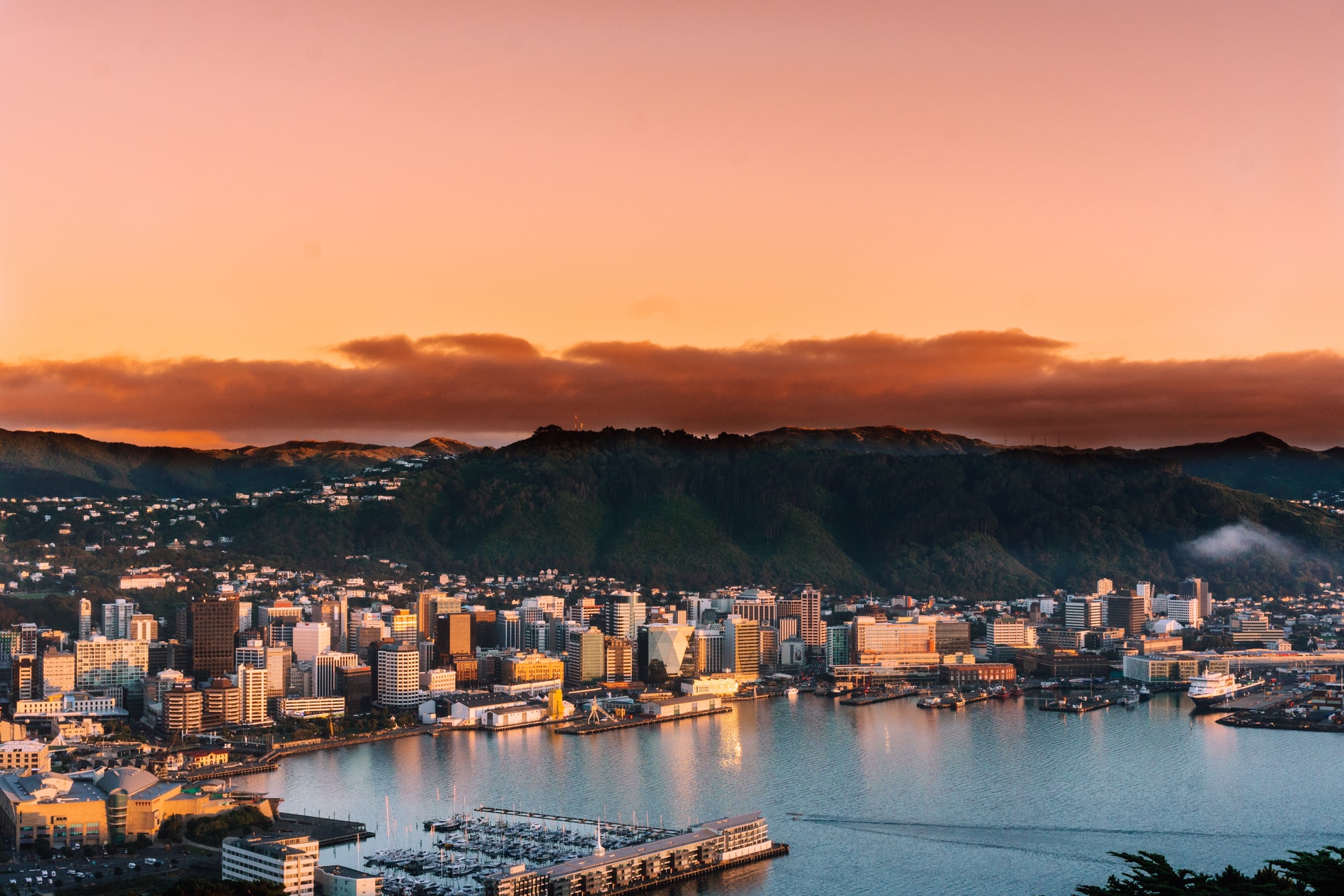
Wellington is the compact, dramatically situated, and internationally celebrated capital city of New Zealand — a city perched on the steep green hills surrounding a magnificent natural harbour at the southern tip of the North Island, where the winds of Cook Strait funnel through with a ferocity that has earned Wellington its reputation as the windiest city in the world and given it a bracing, electric energy quite unlike any other Pacific capital. Described by Lonely Planet as "the coolest little capital in the world" — a verdict echoed by travellers who discover, often to their surprise, a city of exceptional cultural density, creativity, and character packed into a very small physical footprint: Wellington's compact size (the city centre is easily walkable in 30 minutes end to end) combined with its extraordinary concentration of museums, galleries, restaurants, craft breweries, independent coffee shops, live music venues, and vibrant street life creates a per-capita cultural offering that rivals cities many times its size. Wellington is the home of Te Papa Tongarewa — the Museum of New Zealand, widely regarded as one of the finest national museums in the world — and of Weta Workshop, the special effects and prop-making studio behind The Lord of the Rings, The Hobbit, and Avatar, which has made Wellington a pilgrimage destination for film enthusiasts worldwide. The city's spectacular natural setting — the deep blue harbour, the cable car ascending through botanical gardens to a hilltop with panoramic views, the wild coast of the Miramar Peninsula — gives it a physical beauty that makes every approach, whether by sea, air, or road, an arrival of genuine drama.
Best Time to Visit Wellington & Weather Guide
Wellington's temperate oceanic climate is characterised by mild temperatures year-round, significant rainfall spread across all seasons, and the legendary wind that defines the city's character — there is no bad time to visit, but the seasons offer distinctly different experiences.
☀️ Summer (November–March)
Wellington's finest and most active season — temperatures of 18–25°C, long daylight hours (sunset after 9pm in December–January), and the city at its most vibrant and outdoor-focused. The harbour waterfront comes fully alive: outdoor dining, harbour cruises, beach visits to the south coast, and the extraordinary energy of a compact city fully engaged with its spectacular natural setting. December and January are the warmest and most sociable months — the city's outdoor bar and café culture reaches its zenith, the Oriental Parade waterfront is thronged with cyclists, runners, and picnickers, and the evening light on the harbour and hills is magnificent. Wellington's famous Cuba Dupa music festival (March) and the New Zealand Festival of the Arts (biennial, February–March) bring the city's cultural scene to its annual peak. Summer is also the best time for day trips to the Wairarapa wine region across the Rimutaka Range.
Best Time to Visit🍂 Autumn (April–May)
Wellington's most photogenic and arguably most comfortable season — temperatures of 14–20°C, the surrounding hills turning gold and russet, the crowds of summer gone, and the city returning to its everyday creative rhythm. The autumn light on the harbour and the coloured hills is extraordinary — photographers consistently rate Wellington's autumn as among the most beautiful urban autumn settings in the Southern Hemisphere. Rainfall begins to increase but the weather remains largely settled through April. The Wellington on a Plate food festival (August, extending into autumn preparations) celebrates the city's outstanding food and hospitality culture. Autumn is the finest season for unhurried exploration of Te Papa, the city's galleries, and the café and restaurant scene without summer's visitor volumes.
Beautiful & Uncrowded🌧️ Winter (June–August)
Wellington's quietest and most intimate season — temperatures of 8–13°C, frequent rain and the wind at its most assertive, but the city's outstanding indoor cultural life reaching its finest expression: Te Papa, the national galleries, the city's excellent theatres (the St James Theatre and the Opera House), and the extraordinary concentration of Wellington cafés and restaurants all come into their own as the city turns inward. Wellington's café culture is world-class and uniquely suited to wet winter days — the city has more cafés per capita than New York, and the quality of the coffee is exceptional. Matariki (Māori New Year, June–July) is celebrated with increasing public ceremony throughout New Zealand, and Wellington's Matariki events are the finest in the country: lantern festivals, cultural performances, and public celebrations of Māori astronomical and agricultural traditions.
Cultural Season🌸 Spring (September–October)
Wellington's most unpredictable but often delightful season — temperatures recovering to 12–18°C, the Botanic Garden exploding into colour with tulips, daffodils, and the magnificent cherry blossom walk along the cable car route, and the city shaking off winter with a renewed energy and optimism. September can still be cold and wet but October increasingly offers the warm, clear days that characterise Wellington's finest weather: bright sunshine, brilliant harbour blue, and the green hills intensely vivid after the winter rains. The Wellington Sevens rugby tournament (traditionally February, sometimes shifting seasons) and the city's sporting calendar begin building towards the summer peak. Spring is the least crowded season for visiting the main attractions.
Cherry Blossoms & RevivalSummer (Nov–Mar): Light summer clothing for warm days, but always carry a windproof layer — Wellington's harbour wind can make even a 22°C day feel significantly cooler, particularly on the waterfront and hilltops. A light rain jacket is advisable year-round; Wellington's weather can change rapidly regardless of the forecast. Sunscreen is essential — New Zealand's ozone layer is thinner than in most parts of the world, and UV levels are among the highest on Earth. SPF 50+ is the minimum recommendation for any outdoor activity.
Winter (Jun–Aug): Warm, windproof clothing — a good quality waterproof jacket is essential rather than optional. Layers for the variable indoor/outdoor temperature difference. Wellington's wind-chill can make moderate temperatures feel genuinely cold, particularly on the exposed waterfront and hilltops.
Year-round: Comfortable walking shoes for the city's hilly terrain — Wellington's streets are steep and the most rewarding neighbourhoods (Thorndon, Kelburn, Mt Victoria) involve significant climbing. A reusable coffee cup is a social statement in Wellington's café culture — the city has a strong sustainability ethic and single-use cups are frowned upon. New Zealand's strict biosecurity means no fresh food, plant material, or undeclared biological material may be brought into the country — fines are substantial and enforced rigorously.
Top Attractions in Wellington
Wellington packs an extraordinary range of world-class cultural institutions, natural beauty, and unique experiences into a very small geographical area — the city is easily explored on foot or by the famous cable car.
🏛️ Te Papa Tongarewa — Museum of New Zealand
Quite simply one of the finest national museums in the world, and the single most important cultural institution in New Zealand — Te Papa Tongarewa (which means "Our Place" in Māori), opened in 1998 on the Wellington waterfront, is a vast, architecturally striking museum that tells the full story of Aotearoa New Zealand with extraordinary ambition, depth, and visual power: the ancient natural history of the islands (including the extraordinary colossal squid — the world's largest known invertebrate, preserved in a tank and one of the most astonishing natural history specimens on public display anywhere), the Māori cultural heritage collections (among the finest in the world, presented with the full participation and authority of Māori communities), the story of European settlement and the Treaty of Waitangi, and New Zealand's extraordinary contemporary art and culture. Admission is free. Allow a full day — the collections are inexhaustible and the quality is consistently world-class throughout.
World-Class — Free Entry🎬 Weta Workshop & Weta Cave
One of the world's great creative studios and Wellington's most internationally famous institution — Weta Workshop, founded by Peter Jackson, Richard Taylor, and Tania Rodger in 1987, is the special effects, prop-making, armour, and creature design studio responsible for the physical effects of The Lord of the Rings trilogy, The Hobbit, Avatar, Planet of the Apes, and dozens of other landmark films. The Weta Workshop Unleashed guided tour (the full immersive studio tour, 90 minutes) is a revelation for any visitor with an interest in film-making: extraordinary original props, costumes, armour, and creature suits from the world's most ambitious film productions, presented in the working studio environment where they were created. The Weta Cave (free entry) is a smaller exhibition and retail space. Wellington's connection to Peter Jackson's filmmaking world — from the production design studios to the many locations used in The Lord of the Rings — has made the city a globally significant film tourism destination.
Film Pilgrimage🚡 Wellington Cable Car & Botanic Garden
Wellington's most beloved and iconic experience — the Wellington Cable Car, a funicular railway operating since 1902, ascends from Lambton Quay (the city's main shopping street) through four stations to the hilltop suburb of Kelburn, where the Wellington Botanic Garden spreads across 25 hectares of spectacular hillside terrain with panoramic views of the harbour, the city, and on clear days the South Island mountains visible across Cook Strait. The garden's Lady Norwood Rose Garden (the finest rose garden in New Zealand), the native bush section, and the extraordinary hilltop views make it one of the most beautiful urban green spaces in the Southern Hemisphere. The cable car ride itself — through a tunnel, along a steep hillside, past Victorian villas — is one of the most characterful urban transport experiences in the Pacific. Return fare approximately NZD$6.
Iconic Wellington🌊 Oriental Parade & Wellington Waterfront
Wellington's magnificent natural harbour provides the city's finest and most accessible public space — the Wellington Waterfront, stretching from Te Papa east along the harbour edge to the Oriental Parade beach and promenade, is the social heart of the city: a 3km arc of walkway, cycleway, grassed areas, outdoor sculptures, and the broad, sheltered shingle beach of Oriental Bay where locals swim, kayak, and picnic against a backdrop of coloured Victorian villas climbing the hill above. The waterfront's cafés, bars, and the outstanding Wellington Night Market create year-round outdoor life that defines Wellington's character as a harbour city. The evening walk from Te Papa to Oriental Bay at sunset — the harbour gold, the hills green, the city lights beginning to appear — is the finest free experience Wellington offers.
Harbour Life🎭 Cuba Street & Creative Wellington
Wellington's most distinctive and characterful street and the beating heart of the city's creative, bohemian, and counter-cultural life — Cuba Street, a pedestrianised strip of independent shops, music venues, cafés, restaurants, tattoo parlours, vintage clothing stores, and street art running through the heart of the Te Aro neighbourhood, is where Wellington's artistic, activist, and alternative communities have gathered for decades. The famous Bucket Fountain (a kinetic water sculpture of enduring affection and mild absurdity) has been the spiritual focal point of Cuba Street since 1969. The surrounding Te Aro neighbourhood — with its concentration of craft breweries, independent bookshops, live music venues, and the city's finest independent restaurants — is the area of Wellington that most rewards unhurried exploration: every alley and side street reveals something interesting, creative, or unexpected.
Creative Heart🏛️ Parliament Buildings & The Beehive
New Zealand's most recognisable civic buildings and a fascinating architectural study in contrasting democratic visions — the Parliament Buildings complex consists of three structures of strikingly different eras and styles: the neo-Gothic Parliamentary Library (1899), the Edwardian baroque Parliament House (1922), and the extraordinary Executive Wing — universally known as The Beehive — a circular, layered modernist building designed by the British architect Sir Basil Spence in 1964 and completed in 1979, whose distinctive honey-comb profile has made it the most internationally recognised building in New Zealand. Free guided tours of Parliament House and the Debating Chamber are available on weekdays — an excellent and surprisingly engaging introduction to New Zealand's parliamentary democracy and political history.
Civic Landmark🌿 Zealandia — Urban Wildlife Sanctuary
One of the world's most ambitious and successful urban wildlife restoration projects — Zealandia (the Karori Wildlife Sanctuary), just 2km from the city centre in a steep valley behind the Botanic Garden, is a 225-hectare fully fenced ecosanctuary where New Zealand's ancient endemic wildlife has been restored to a natural urban environment from which all introduced predators (rats, stoats, possums) have been permanently excluded. The results are extraordinary: tuatara (the ancient reptile unchanged since the dinosaur era, found nowhere else on Earth), kākā parrots, little spotted kiwi, kōkako, tīeke (saddleback), and dozens of other endemic species now roam freely within the sanctuary and increasingly spill over into the surrounding Wellington suburbs. The night tour — guided after dark to observe kiwi, tuatara, and glowworms in their natural habitat — is one of the finest wildlife experiences available in any world capital.
Endemic Wildlife🏖️ South Coast Wild Beaches
Wellington's dramatic and largely undiscovered wild south coast — just 20 minutes by bus from the city centre, the rugged Cook Strait coastline of Island Bay, Lyall Bay (Wellington's surf beach, home to a thriving surf culture and the city's best fish and chips at the legendary Hau café), Owhiro Bay, and the spectacular Red Rocks coastal walk (where a colony of New Zealand fur seals hauls out on the rocks in winter) offers a wild, windswept Pacific coast experience of genuine drama and beauty within the city limits. The contrast between the sheltered harbour on one side of the Miramar Peninsula and the full force of the Tasman Sea on the other captures Wellington's physical character perfectly: a city defined by its extraordinary position between the calm and the wild.
Wild CoastLocal Food Recommendations
Wellington is, without serious debate, the food and coffee capital of New Zealand — a city whose per-capita concentration of outstanding restaurants, world-class coffee roasters, craft breweries, natural wine bars, and independent food producers creates a culinary scene that regularly wins national and international recognition entirely disproportionate to its population of 400,000.
🍽️ Must-Try Wellington Dishes & Foods
- Whitebait fritter — New Zealand's most prized seasonal delicacy and Wellington's most beloved traditional dish: tiny, transparent juvenile fish (the young of native galaxiid species) mixed into a simple egg batter and pan-fried to produce a light, golden fritter of extraordinary delicacy. New Zealand whitebait — in season August to November — is one of the finest and most expensive local foods in the country; a whitebait fritter sandwich on white bread with a squeeze of lemon at a Wellington waterfront café during the season is the definitive local eating experience. Quality varies dramatically — seek out restaurants that use abundant, freshly caught whitebait rather than the thin, overextended fritters of the tourist trade.
- Pāua (abalone) dishes — New Zealand's native pāua, a large marine snail with an extraordinarily beautiful iridescent shell used extensively in Māori carving and jewellery, produces a richly flavoured, slightly chewy meat that is one of the finest local seafood specialities: pāua fritters, pāua chowder, and raw pāua prepared in the Japanese style are available at Wellington's better seafood restaurants. Pāua shell jewellery and carvings are among the finest distinctly New Zealand souvenirs.
- Flat white coffee — Wellington's most important cultural contribution to the world: the flat white — a double ristretto espresso with microfoamed whole milk, producing a coffee of intense flavour, silky texture, and perfect coffee-to-milk ratio — was invented (or at least perfected and popularised) in Wellington in the 1980s, and the city's café culture remains the gold standard against which all Australasian and international coffee is measured. Wellington has more cafés per capita than New York City, and the quality of the espresso is universally high — a bad coffee in Wellington is genuinely difficult to find. The flat white is consumed here with a seriousness and connoisseurship that approaches religious observance.
- Hāngi (earth oven cooking) — New Zealand's most important and deeply traditional Māori cooking method: meat (usually pork, chicken, and lamb) and vegetables (kūmara/sweet potato, potato, pumpkin) slow-cooked in baskets lowered into a pit lined with heated stones and covered with earth, producing food of extraordinary tenderness and a distinctive smoky, earthy flavour that is the taste of New Zealand celebration and ceremony. Hāngi is prepared for significant Māori occasions — tangihanga (funerals), pōwhiri (welcomes), and large communal gatherings — and is available at Māori cultural experiences and selected Wellington restaurants and events.
- Wellington on a Plate festival food — Wellington's annual food festival (August) is the finest food event in New Zealand: participating restaurants across the city create special menus, food events, and culinary experiences at accessible price points — the festival's Burger Wellington competition produces the most creative and technically ambitious burger competition in the Southern Hemisphere, with entries from the city's finest chefs. Timing a visit to coincide with Wellington on a Plate provides access to the full depth of the city's extraordinary hospitality talent at its most inventive and celebratory.
- New Zealand craft beer and natural wine — Wellington's craft beer scene is the finest in New Zealand: the city's small size and density of creative, quality-focused small breweries (Garage Project, Yeastie Boys, Parrotdog, Liberty Brewing) has produced a beer culture of exceptional innovation and quality. The natural wine movement — biodynamic and low-intervention wines from the nearby Wairarapa, Martinborough, and Hawke's Bay wine regions — has found its most enthusiastic home in Wellington's bar scene, with several dedicated natural wine bars (Field & Green, Lulu) offering the finest and most unusual New Zealand and international natural wines available anywhere in the country.
☕ Coffee, Craft Beer & Bar Culture
- Wellington's café culture — the defining social institution of the city and the benchmark against which all New Zealand coffee is measured. Wellington's cafés are not merely places to drink coffee — they are the primary social infrastructure of a city that conducts much of its intellectual and creative life over a flat white at a marble bar. The city's best coffee roasters (Havana Coffee Works, Coffee Supreme, Peoples Coffee) supply the cafés from roasteries within the city, and the standard of espresso extraction is uniformly high. The ritual of a morning flat white at a favourite Wellington café is one of the city's most fundamental pleasures.
- Garage Project — Wellington's most celebrated and internationally recognised craft brewery, founded in 2011 in a former petrol station on the corner of Aro Street: an extraordinary range of experimental, seasonal, and limited-release beers of remarkable creativity and quality, available at the brewery tap room and throughout Wellington's bars. The annual Garage Project Day of the Dead beer (a Mexican-inspired dark ale brewed each autumn) is one of the most anticipated seasonal releases in New Zealand brewing. The tap room is a pilgrimage for any serious beer drinker.
- Wellington waterfront bars at sunset — the city's most magnificent social ritual: cold beer or a glass of Martinborough Pinot Noir at an outdoor table on the waterfront as the sun sets over the Rimutaka Range to the north and the harbour turns gold and copper. The Foxglove at Oriental Parade, Scopa, and the various harbour-edge venues from the waterfront to Frank Kitts Park provide the finest settings. Wellington's compact geography means the city's best waterfront bars are within easy walking distance of every accommodation option in the centre.
- Night Noodle Markets and Wellington Night Market — Wellington's Asian food market culture is exceptional: the weekly Wellington Night Market on Friday and Saturday evenings on Tory Street brings together the city's extraordinary diversity of Asian, Pacific Island, and fusion street food in an outdoor market of genuine quality and atmosphere. The annual Night Noodle Markets on the waterfront are one of Wellington's most popular summer events, drawing enormous crowds for high-quality hawker-style food from the city's best Asian restaurant operators.
🍽️ Where to Eat — Local Tips
- Ortega Fish Shack — Wellington's most acclaimed seafood restaurant and consistently one of the finest restaurants in New Zealand: a small, intimate room on Majoribanks Street serving the finest local seafood — whole fish, shellfish, and the best whitebait in the city — with a natural wine list of outstanding quality. Reserve weeks in advance in summer. The whole snapper with salsa verde is the dish most frequently cited by Wellington food professionals as the finest single restaurant dish in the city.
- Logan Brown — Wellington's grand dining institution: a high-ceilinged former bank chamber on Cuba Street housing one of New Zealand's most celebrated and enduring fine dining restaurants, serving contemporary New Zealand cuisine of consistent excellence — local produce, outstanding wine list, and service that represents the finest expression of Wellington hospitality. The degustation menu is the most comprehensive experience of New Zealand's finest ingredients and cooking techniques available in the capital.
- Hau (Lyall Bay) — Wellington's most beloved fish and chips shop, on the wild south coast at Lyall Bay: arguably the finest fish and chips in New Zealand, eaten at outdoor tables watching the surfers and the Cook Strait swell rolling in. The combination of freshly battered blue cod, proper chips, and a cold beer with a view of the Tasman Sea is one of Wellington's most democratically perfect meals — beloved equally by the city's most discerning food professionals and the families who have been coming here for generations.
- Duke Carvell's Swan Lane Emporium (Cuba Street) — Wellington's finest natural wine bar and one of the city's most idiosyncratic and beloved food and drink destinations: a narrow, crowded, brilliantly curated bar with an exceptional selection of New Zealand and international natural wines, excellent small plates, and the atmosphere of genuine neighbourhood life that defines Cuba Street at its best. An essential evening stop for any serious food and drink visitor to Wellington.
- Wellington Night Market (Tory Street, Fri–Sat) — the finest and most authentic street food market in New Zealand: 70+ vendors from Wellington's extraordinary diversity of food cultures (Malaysian, Vietnamese, Korean, Cambodian, Ethiopian, Indian, Mexican, Pacific Island) serving freshly prepared food at $8–15 per dish in an outdoor market of genuine quality and atmosphere. The best and most affordable introduction to Wellington's food diversity — a complete dinner for $20–25 including dessert and a cold drink.
🌿 Māori Culture & New Zealand Heritage
- Wellington is the finest city in New Zealand to encounter Māori culture in depth — the national collections at Te Papa Tongarewa include the finest publicly accessible Māori art and taonga (treasured objects) in the world, presented with the full authority and participation of iwi (tribal) communities. The museum's Te Marae (the ceremonial meeting house within Te Papa) is one of the most significant cultural spaces in New Zealand, and the guided Māori culture tours at Te Papa provide the most authoritative and moving introduction to the Māori world available in the capital.
- The Treaty of Waitangi — New Zealand's founding document, signed at Waitangi in the Bay of Islands in 1840 between the British Crown and Māori chiefs — is at the centre of New Zealand's ongoing national conversation about the relationship between Māori and Pākehā (European New Zealanders), land rights, cultural sovereignty, and the meaning of partnership. Te Papa's treaty exhibition provides the finest single introduction to this complex and unresolved history that is still shaping New Zealand politics and society today.
- Weta Workshop's cultural legacy — Peter Jackson's decision to film The Lord of the Rings entirely in New Zealand transformed the country's film industry, created Weta Workshop as a world-class special effects studio, and established Wellington as a globally recognised film production centre. The studio's extraordinary craft work — applying traditional artisanal skills (metalwork, leatherwork, woodcarving, painting, sculpture) to film production — has won 14 Academy Awards. The Weta Workshop tour is as much a celebration of traditional craft excellence as it is a film industry experience.
- New Zealand native bush walks — Wellington's extraordinary geography means that genuinely wild native bush — kahikatea, rimu, and pōhutukawa forests alive with native birds — is accessible within 20 minutes of the city centre. The Zealandia to Town Belt walk, the Mt Victoria lookout track, and the Makara walkway on the wild west coast all provide immersive native bush experiences of genuine ecological richness within a short distance of central Wellington.
Day Trip Itineraries from Wellington
Wellington's position at the southern tip of the North Island provides outstanding day trip and multi-day excursion possibilities across the Cook Strait and into the spectacular landscapes of the surrounding region:
🍷 Day Trip: Martinborough & the Wairarapa Wine Country
Travel time: 1 hour by road over the Rimutaka Range | Cost: Car hire; or organised wine tour from $80–120
Wellington's most beloved day trip — Martinborough, the charming colonial township at the heart of the Wairarapa wine region, is one of New Zealand's finest wine destinations: a compact village green surrounded by acclaimed wineries producing some of the country's finest Pinot Noir (Ata Rangi, Craggy Range, Palliser Estate, Te Kairanga). The Wairarapa's cool climate and free-draining gravelly soils produce Pinot Noir of elegant, Burgundian character that is consistently rated among the best in the Southern Hemisphere. The annual Toast Martinborough festival (November) is the finest and most intimate vineyard food and wine festival in New Zealand. The drive over the Rimutaka Range — a winding mountain road with spectacular views — is itself a memorable experience.
Wine Country⛴️ Ferry to Picton & Marlborough Sounds
Travel time: 3.5 hours by Interislander or Bluebridge ferry | Cost: From NZD$55 one-way; car from NZD$140
One of the world's great ferry journeys — the Cook Strait ferry crossing from Wellington to Picton in the South Island is a spectacular 3.5-hour voyage through the extraordinary drowned valley landscape of the Marlborough Sounds: a complex network of sunken river valleys and peninsulas creating hundreds of kilometres of sheltered, brilliantly clear waterways fringed by native bush. The approach to Picton through Queen Charlotte Sound is one of the finest coastal arrivals in the Pacific — the water turns from the deep blue-grey of the open Cook Strait to the brilliant turquoise of the enclosed Sounds as the ferry threads through narrow channels between forest-covered hills. The Marlborough wine region (Sauvignon Blanc capital of the world) and the Abel Tasman National Park are within reach for a multi-day South Island extension.
Iconic Ferry Journey🦭 Kapiti Island — Ancient Bird Sanctuary
Travel time: 1 hour by road to Paraparaumu + 15-min boat | Cost: Permit required (free); boat ~NZD$70 return
One of New Zealand's most important and most rewarding wildlife sanctuaries — Kāpiti Island, a 10km long nature reserve 5km off the Kapiti Coast north of Wellington, is a predator-free island where the rarest birds in New Zealand have been restored to populations of genuine abundance: kākāpō (the world's only flightless parrot), little spotted kiwi, kōkako, tīeke, kākā, and dozens of other endemic species nest and feed in extraordinary density in the island's intact native forest. Day visits require a Department of Conservation permit (bookable online in advance — essential, numbers are strictly limited) and the boat transfer from Paraparaumu Beach. The experience of walking through forest alive with endemic birds at close range — birds that have lost their fear of humans over generations of predator-free existence — is one of the most moving wildlife encounters available in New Zealand.
Endemic Birds🌋 Day Trip: Tongariro Alpine Crossing
Travel time: 4 hours by road (or overnight in Taupo/National Park village) | Cost: Shuttle from ~NZD$35; no entry fee for the crossing itself
Regularly voted the finest one-day hike in New Zealand and one of the greatest day walks in the world — the Tongariro Alpine Crossing (19.4km, 6–8 hours) traverses the volcanic landscape of Tongariro National Park (the world's fourth oldest national park and a UNESCO Dual World Heritage Site) past the smoking craters of Mount Ngāuruhoe (Peter Jackson's Mount Doom), the extraordinary Emerald Lakes (vivid turquoise volcanic crater lakes coloured by dissolved minerals), steaming hydrothermal vents, and ancient lava flows of extraordinary geological drama. A long day trip from Wellington requiring an early 4am departure — most visitors overnight near the park for a more relaxed experience — but the walk is so extraordinary that the distance is consistently judged worthwhile.
World's Best Day HikeTourist Tips for Wellington
🚌 Getting Around
- Wellington's compact city centre is extremely walkable — the main attractions (Te Papa, the waterfront, Cuba Street, Parliament, the cable car base) are all within 20–30 minutes on foot from any central accommodation. The city's hilly topography makes flat white shoes preferable to heels for central exploration.
- Wellington Cable Car — the city's most beloved and useful public transport link: running from Lambton Quay to Kelburn every 10 minutes from early morning to late evening, providing access to the Botanic Garden, Zealandia, and the hilltop suburbs. A return ticket costs approximately NZD$6 — one of the finest value urban transport experiences in New Zealand.
- Metlink buses — Wellington's extensive bus network covers the entire city and the wider Wellington region (Hutt Valley, Kapiti Coast, Porirua). A Snapper card (contactless stored-value card) provides discounted fares and is the most practical payment method — available from convenience stores throughout the city. Journey planner at metlink.org.nz. The Airport Flyer express bus connects the city centre with Wellington Airport in approximately 30 minutes (NZD$12).
- Taxis and rideshare — Uber and Zoomy (a New Zealand rideshare service) both operate in Wellington with transparent pricing. Taxis are available from ranks at the railway station, at Te Papa, and can be hailed on main streets. Typical city centre fares NZD$10–20.
- Wellington Airport (WLG) is just 8km from the city centre — one of the shortest airport-to-city-centre distances of any capital in the world. The airport is located on the Miramar Peninsula between the harbour and the wild south coast; the approach by air — threading between the harbour hills in strong crosswinds — is one of the most dramatic landing experiences in world aviation, occasionally ranked as the world's most challenging commercial airport approach.
💡 General Safety & Travel Tips
- Wellington is a very safe city — New Zealand consistently ranks among the world's safest countries, and Wellington's compact, well-lit city centre is largely free from serious crime. The standard urban precautions apply (be aware of your belongings, avoid isolated areas very late at night), but visitors from most major world cities will find Wellington's safety standards noticeably higher than those they are accustomed to.
- The New Zealand Dollar (NZD) is the currency. ATMs are widely available throughout the city. Credit cards (Visa, Mastercard, Amex) are accepted almost universally — New Zealand is a predominantly cashless society and many establishments prefer card payments. Currency exchange at banks and authorised exchanges; avoid hotel exchange desks for large sums.
- New Zealand has among the strictest biosecurity measures in the world — all fresh food, plant material, soil, and biological items must be declared on arrival. Failure to declare carries fines of NZD$400 on the spot and up to NZD$100,000 for serious offences. This is not a formality — New Zealand's extraordinary endemic biodiversity (evolved in isolation for 80 million years) is genuinely vulnerable to introduced species and diseases, and the biosecurity system is the primary defence against the next ecological catastrophe.
- Sun safety is critically important in New Zealand — the country's thin ozone layer means UV levels are among the highest in the world. The Cancer Society of New Zealand recommends SPF 50+ sunscreen applied 20 minutes before sun exposure and reapplied every 2 hours, a wide-brimmed hat, UV-blocking sunglasses, and UV-protective clothing for any extended outdoor activity. "Slip, Slop, Slap, Wrap" is the national sun safety message — take it seriously.
- New Zealand uses 230V/50Hz electricity with unique Type I plugs (two or three flat angled pins — the same as Australia). Bring appropriate adaptors; the New Zealand plug type is distinct from UK and European standards and not covered by most universal travel adaptors. Adaptors are available at Auckland or Wellington airport on arrival.
Apply for Tourist Visa
New Zealand operates a New Zealand Electronic Travel Authority (NZeTA) system — citizens of visa-waiver countries (including the UK, EU, USA, Canada, Japan, South Korea, and many others) do not require a full tourist visa but must obtain an NZeTA before travel. The NZeTA is applied for online or via the NZ Immigration mobile app (cost approximately NZD$17 online / NZD$23 via app) and is valid for up to 2 years for multiple visits of up to 90 days each. Citizens of countries not on the visa-waiver list must apply for a Visitor Visa through the New Zealand Immigration website. A visitor levy (IVL — International Visitor Conservation and Tourism Levy) of NZD$35 is charged as part of the NZeTA application. Verify your country's current requirements at immigration.govt.nz before travel. New Zealand Visa / NZeTA
Important Emergency Numbers
🇳🇿 Wellington Emergency Contacts
- 🚑 Ambulance: 111
- 🔥 Fire Brigade: 111
- 👮 Police: 111
International Emergency Phone Numbers
Find Flights to Wellington
Wellington Airport Code: WLG — Wellington International Airport, 8km from the city centre (20–30 minutes by bus or taxi)
Airport Transfer: The Airport Flyer express bus (route 2) runs between the airport and the city centre approximately every 30 minutes (NZD$12, 30 minutes). Taxis and Uber cost approximately NZD$30–40. Wellington Airport operates direct international flights to Sydney (Air New Zealand, Qantas, Jetstar), Melbourne (Air New Zealand), Brisbane (Air New Zealand, Jetstar), and Singapore (Singapore Airlines), as well as extensive domestic services to Auckland, Christchurch, Queenstown, Dunedin, and all major New Zealand cities. Most long-haul visitors route through Auckland or Sydney for connections to Wellington.
International Airport FinderCurrency in Wellington
The currency of New Zealand is the New Zealand Dollar (NZD). New Zealand is a predominantly cashless society — credit and debit cards (Visa, Mastercard, Amex, and contactless/EFTPOS) are accepted almost universally, including at markets, food trucks, and small cafés. ATMs are widely available throughout central Wellington. Currency exchange at banks and authorised exchange bureaux (avoid hotel rates for large amounts). The NZD is freely convertible internationally.