Windhoek Weather
WINDHOEK WEATHERAbout Windhoek
Windhoek is the compact, surprisingly sophisticated capital city of Namibia — one of Africa's most extraordinary and least-populated nations, a vast country of ancient deserts, dramatic landscapes, and exceptional wildlife that is widely considered to offer the finest safari and wilderness experience on the African continent. Set at 1,700 metres above sea level on the Central Plateau of southern Africa, Windhoek enjoys one of the finest climates of any African capital — warm, dry, and brilliantly sunny for most of the year — and combines the remnants of a distinctive German colonial architectural character (Namibia was German South West Africa from 1884 to 1915) with a modern, well-functioning city of genuine orderliness and prosperity unusual in sub-Saharan Africa. With a population of under half a million, Windhoek is one of Africa's smallest capitals — a city easily explored on foot over a day or two — but its significance to the visitor lies less in the city itself than in its role as the gateway to Namibia's transcendent natural landscapes: the ancient Namib Desert (the world's oldest desert, 55 million years old), the extraordinary wildlife of Etosha National Park, the dramatic Sossusvlei dune fields, the Skeleton Coast, and Fish River Canyon — one of the largest canyons on Earth. Every serious Namibia safari or self-drive adventure begins and ends in Windhoek.
Best Time to Visit Windhoek & Weather Guide
Windhoek's high-altitude plateau location gives it a remarkably pleasant semi-arid climate — warm and sunny throughout the year, with a distinct rainy season and a long, cool dry season that is the prime time for wildlife viewing across Namibia.
🌤️ Cool Dry Season (May–August)
The finest and most comfortable time to visit — temperatures of 20–26°C during the day with cool to cold nights (sometimes dropping below 5°C in June–July at Windhoek's 1,700m elevation). Clear, brilliant blue skies and virtually zero rainfall. This is Namibia's prime safari season: wildlife concentrates around water sources in Etosha National Park, making game viewing exceptional; the dry air and clear skies produce the finest light for landscape photography; and the Namib Desert dunes of Sossusvlei are at their most dramatic in the sharp, cool morning light. June and July are the most comfortable months for touring — mornings can be cold (bring warm layers) but days are warm and perfectly clear. Book accommodation and car hire well in advance for this peak season.
Best Time to Visit☀️ Hot Dry Season (September–October)
The transition to summer — temperatures climb to 28–34°C by October, with hot, increasingly dusty conditions as the dry season reaches its peak. Etosha's waterholes are at their most productive for game viewing in September and October — animals are desperate for water and congregate in large numbers. The heat is intense but manageable with early starts and midday rests. October in particular is one of the finest wildlife viewing months in all of Africa — dramatic, harsh landscapes, dense concentrations of game, and the building anticipation of the approaching rains creates an atmosphere of profound natural intensity. Windhoek itself is lively in this period as safari-goers pass through on their way to and from the national parks.
Excellent Wildlife Viewing🌧️ Green Season (November–April)
Namibia's summer brings the rains — brief but intense afternoon thunderstorms transform the landscape from brown to vivid green almost overnight. Temperatures reach 30–36°C with high humidity during the storm periods. The green season is low season for tourism — accommodation prices are at their lowest, the country is uncrowded, and Namibia's landscapes are at their most photogenic: red dunes reflected in temporary pans, newborn wildlife in the bush, and the extraordinary ephemeral rivers of the Namib running for the first time in months. December to February sees the heaviest rainfall. The green season is particularly rewarding for birdwatchers — Namibia's resident bird species are joined by thousands of Palaearctic migrants, and the breeding season produces extraordinary activity.
Green / Low Season🎉 Festival & Event Highlights
Windhoek's cultural calendar combines African and German heritage in a distinctive programme. The Windhoek Carnival (WIKA) — held in April, a legacy of the German colonial era — is the city's most flamboyant annual event: a week of street parades, costume balls, and outdoor festivities with a distinctly European character transplanted to the African plateau. The Windhoek Show (September) is Namibia's largest agricultural and trade fair. Independence Day (21 March) is celebrated with considerable national pride — Namibia only gained independence from South Africa in 1990 and the day carries deep emotional significance. The Oktoberfest Windhoek (October) is one of the most authentic and enthusiastic Oktoberfest celebrations outside Bavaria — a testament to the enduring German cultural influence in the city.
Festival CalendarCool Dry Season (May–Aug): Warm layers are essential — Windhoek's altitude means mornings and evenings can be genuinely cold (5–10°C). A fleece or light down jacket, warm socks, and a windproof layer for early morning game drives. Sunscreen is still essential — the high-altitude African sun is deceptively intense even in the coolest months. Neutral/khaki colours are appropriate for game drives and bush walking.
Hot Season (Sep–Oct): Lightweight, breathable, light-coloured clothing for the heat. Maximum sun protection (SPF 50+, wide-brimmed hat, UV sunglasses). A warm layer for early morning game drives — the temperature difference between a 5am game drive start and the 35°C afternoon can be 25 degrees. Stay extremely well hydrated.
Green Season (Nov–Apr): Light summer clothing for the heat. A light waterproof jacket for the afternoon thunderstorms. Insect repellent is essential — malaria is present in northern Namibia (Etosha, Caprivi), though Windhoek itself is malaria-free. Consult your doctor about prophylaxis if travelling beyond the capital.
Year-round: Good walking shoes or light hiking boots for rocky terrain. A quality camera — Namibia's landscapes and wildlife are among the most photogenic in the world. Binoculars for game viewing. Self-drive visitors will need an international driving permit and should carry extra water and a basic vehicle recovery kit for gravel road travel.
Top Attractions in Windhoek
Windhoek's own attractions are compact and easily explored in a day — the city's primary function for most visitors is as the launching point for Namibia's extraordinary wilderness, but the capital itself offers a distinctive and rewarding combination of German colonial architecture, African culture, and exceptional museums.
🏛️ National Museum of Namibia
The essential introduction to Namibia's extraordinary natural and cultural heritage — the National Museum of Namibia, spread across two sites in central Windhoek (the Alte Feste historical museum and the Owela natural history museum), presents the full sweep of Namibian history: from the ancient San Bushmen rock art tradition (among the oldest in the world) and the diverse cultures of the Himba, Herero, Nama, and Damara peoples, through the German colonial period and the brutal Herero and Nama genocide (1904–1908 — one of the first genocides of the 20th century, largely unknown outside Namibia), the South African mandate period, and the independence struggle of SWAPO. The natural history collection covers Namibia's extraordinary endemic wildlife and the ancient geology of the Namib — among the most scientifically significant desert landscapes on Earth.
Essential Visit🕌 Christuskirche (Christ Church)
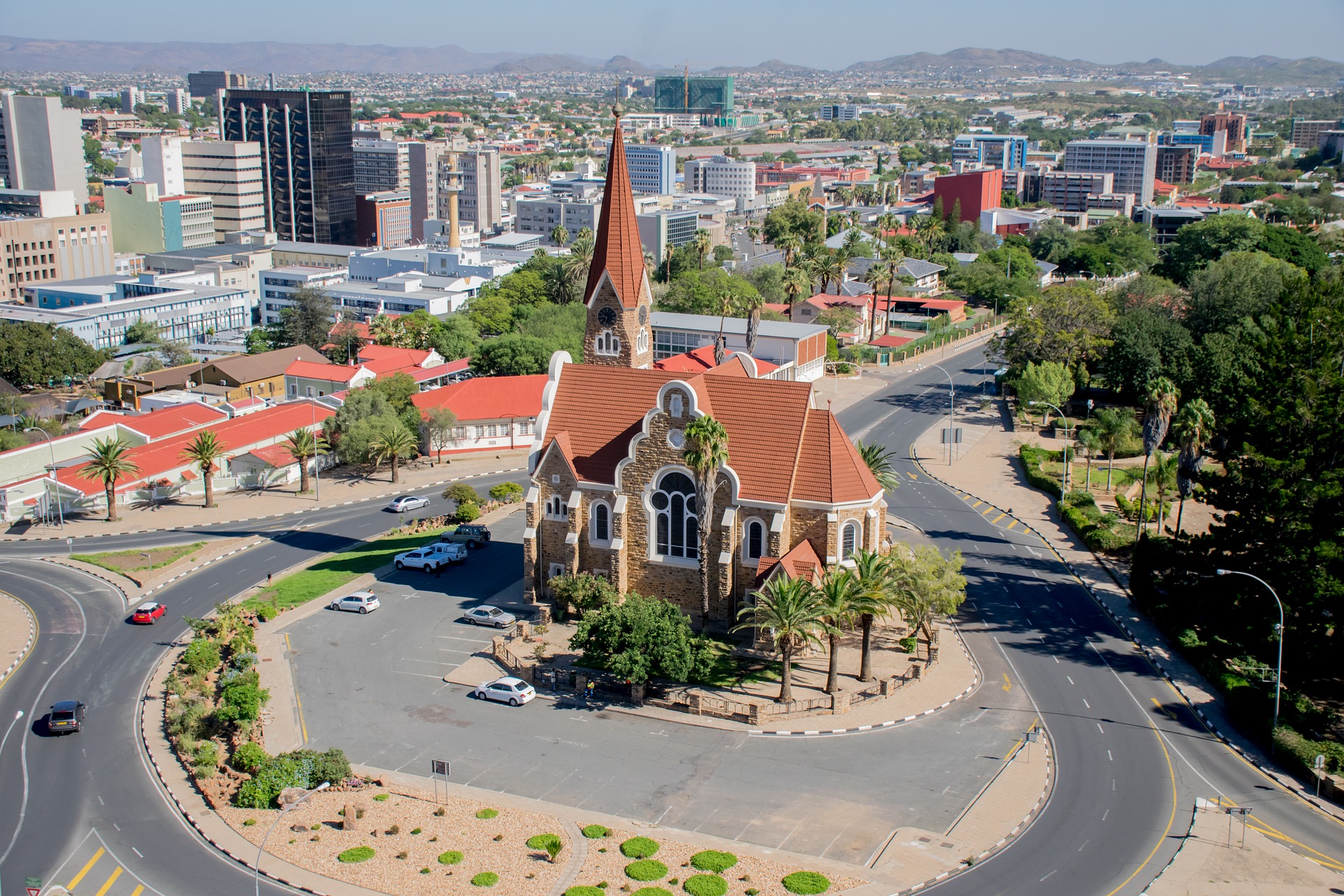
The most iconic and photographed building in Windhoek — the Christuskirche (Christ Church), a Lutheran church completed in 1910 in an eclectic mix of neo-Gothic and Art Nouveau styles, sits at the top of the city's central hill on a traffic island surrounded by jacaranda trees, its pale sandstone walls and copper-green spire creating one of the most distinctive skylines in southern Africa. The church was built for Windhoek's German Lutheran community and remains an active congregation — the interior, with its imported German stained glass and handsome woodwork, is open to visitors outside service times. The Christuskirche is the single most recognisable symbol of German colonial Windhoek and the most-photographed subject in the capital.
Iconic Landmark🦒 Namibia Craft Centre & Independence Avenue
The finest concentrated craft shopping in Namibia — the Namibia Craft Centre, housed in a converted railway building near the city centre, brings together the finest traditional and contemporary Namibian crafts under one roof: Himba jewellery and body adornment objects, San Bushman ostrich-egg bead necklaces, Herero doll figures in their extraordinary Victorian-era dress, hand-woven Karakul wool rugs and carpets in desert-colour geometric patterns, and the carved soapstone and wooden wildlife sculptures that are Namibia's most popular souvenir. The adjacent Independence Avenue (Windhoek's main street) is lined with German-era colonial buildings, pavement café terraces, and the Post Street Mall with its famous meteorite display — fragments of the Gibeon meteorite that fell across southern Namibia 600 million years ago, now displayed as street art.
Shopping & Culture🦁 AfriCat Foundation & Cheetah Conservation
One of the most rewarding wildlife encounters accessible from Windhoek — the AfriCat Foundation at Okonjima Nature Reserve (3 hours north of Windhoek) is the world's leading cheetah and leopard rehabilitation centre, rescuing large cats that have come into conflict with Namibian farmers and preparing them for release into the wild. Day trips and overnight stays at Okonjima offer the most reliable and ethically operated cheetah and leopard encounters in southern Africa — tracking rehabilitated cheetah on foot through the bush is among the most extraordinary wildlife experiences available anywhere. Namibia is home to the world's largest wild cheetah population (approximately 3,500 individuals — nearly 40% of the global total) and Windhoek is the best base from which to understand and encounter this extraordinary concentration.
Wildlife Encounter🏰 Alte Feste (Old Fort) & Rider Memorial
The oldest surviving building in Windhoek and one of the most historically significant sites in Namibia — the Alte Feste (Old Fort), built by German colonial troops in 1890 as a military garrison, now houses the historical section of the National Museum. The fort's thick whitewashed walls, shaded courtyards, and period military exhibits create an evocative memorial to the colonial era that shaped modern Namibia. Adjacent to the fort stands the controversial Reiterdenkmal (Rider Memorial — also known as the Equestrian Monument) — a 1912 bronze statue of a German colonial soldier that has been the subject of intense political debate about historical memory and decolonisation. The complex of fort, memorial, and museum represents the most concentrated and thought-provoking encounter with Namibia's colonial history available in Windhoek.
Colonial Heritage🌅 Joe's Beerhouse & Katutura Township Tour
Two contrasting but equally essential Windhoek experiences. Joe's Beerhouse — a sprawling, eccentrically decorated outdoor restaurant and bar on the edge of the city centre — is the most beloved and characterful gathering place in Windhoek: an informal, hugely popular institution serving legendary game meat platters (oryx, kudu, warthog, springbok) and cold Windhoek Lager in a garden of extraordinary miscellaneous clutter that has been accumulating for decades. The atmosphere — a boisterous cross-section of Namibian society, tourists, farmers, and expats — is unique to Windhoek. A Katutura Township Tour — conducted by local guides from the former apartheid-era township north of the city centre — provides the essential counterpoint: a frank, moving, and personally informative encounter with the Namibian majority's urban experience, the legacy of apartheid spatial planning, and the extraordinary resilience and vitality of Windhoek's largest community.
Local Experience🌿 Daan Viljoen Game Reserve
The finest and most accessible wildlife experience within immediate reach of Windhoek — the Daan Viljoen Game Reserve, just 18km west of the city centre in the Khomas Hochland hills, is a compact but genuinely wild reserve protecting 3,900 hectares of thornbush savannah with populations of kudu, gemsbok (oryx), springbok, blue wildebeest, giraffe, zebra, and over 200 bird species. Walking trails through the reserve — guided and self-guided — allow visitors to experience the Namibian bush on foot in a safe and accessible environment. The reserve's elevated position in the Khomas Hochland hills provides dramatic views over the surrounding landscape. A morning game walk at Daan Viljoen followed by breakfast at the reserve's restaurant is the finest introduction to Namibia's wildlife available without leaving the capital city area.
Easy Wildlife Fix🎨 NamibiaArt Gallery & Omba Gallery
Windhoek's most significant contemporary art spaces — the National Art Gallery of Namibia presents the finest collection of Namibian and southern African contemporary art in the country: paintings, sculpture, photography, and mixed-media works by established and emerging Namibian artists addressing the themes of landscape, identity, memory, and decolonisation that define contemporary Namibian cultural life. The Omba Gallery, adjacent to the Namibia Craft Centre, presents the highest quality traditional and contemporary Namibian craft objects selected for artistic merit — the finest single source of investment-quality Namibian art and craft in the country. Both galleries provide an important cultural complement to the predominantly wilderness-focused visitor experience that dominates Namibia tourism.
Art & CultureLocal Food Recommendations
Windhoek's food scene is a pleasantly surprising blend of German colonial culinary heritage, traditional Namibian cooking, and the outstanding game meat tradition of a country where oryx, kudu, springbok, and warthog are as commonly eaten as beef — a unique and richly flavoured culinary landscape that rewards adventurous visitors with some of the finest and most distinctive meat dishes in Africa.
🍽️ Must-Try Namibian Dishes
- Oryx steak (gemsbok) — the defining Namibian game meat experience and the dish most emblematic of the country's extraordinary wildlife abundance: oryx (gemsbok) steak, grilled over wood coals to medium-rare, is lean, intensely flavoured, and deeply red — a meat of exceptional quality from an animal that has lived wild in the Namib Desert on sparse vegetation, producing flesh of remarkable leanness and mineral depth. Available at virtually every game restaurant in Windhoek, it is the single dish that most completely captures the flavour of Namibia. Order it with a simple green salad and a glass of cold Windhoek Lager for the most authentically Namibian meal available.
- Kapana (street-grilled beef) — the most beloved and democratically consumed street food in Windhoek and throughout Namibia: fresh beef (or goat) cut from the hanging carcass to order, grilled over an open charcoal fire on a wooden board, and served with a peri-peri tomato and onion relish, chilli sauce, and a handful of fat chips. Kapana is the street food of the Katutura township and the informal markets of Windhoek's working-class neighbourhoods — particularly at the Single Quarters Market in Katutura, where the communal kapana experience (multiple grills, clouds of charcoal smoke, cold beers, and the electric atmosphere of a market in full swing) is one of the most authentic and exhilarating food experiences in southern Africa.
- Potjiekos (pot stew) — the great communal cooking tradition of southern Africa: meat, vegetables, and spices slow-cooked in a three-legged cast-iron pot (potjie) over a small wood fire for several hours, producing a rich, deeply flavoured stew of fall-apart tenderness. The potjiekos tradition — shared equally by Namibia's Afrikaner, German, and African communities — is at its finest at outdoor braais (barbecues) and farm gatherings, but is available at traditional restaurants throughout Windhoek. Game potjiekos (kudu or oryx with dried fruit, sweet potato, and red wine) is the most distinctively Namibian version.
- Biltong and droëwors — Namibia's most celebrated preserved meat products and the essential snack food of the southern African wilderness tradition: biltong (air-dried, spiced strips of beef, oryx, kudu, or springbok — intensely flavoured, chewy, and addictive) and droëwors (dried, spiced sausage of similar heritage) are sold at every butcher, petrol station, and market in Namibia. The quality of Namibian game biltong — made from wild-caught animals feeding on natural vegetation — is consistently superior to South African equivalents. A selection of Namibian biltong and droëwors is both the finest snack for long game-drive days and the most practical and universally appreciated food souvenir from the country.
- Oshifima (mahangu porridge) — the staple food of northern Namibia's Owambo majority and the most widely eaten traditional dish in the country: a thick, smooth paste of pearl millet (mahangu) flour, cooked to a dense, neutral-flavoured consistency and served with spinach, dried fish (ombidi), or meat stew. Oshifima is the Namibian equivalent of West Africa's tô or East Africa's ugali — the central carbohydrate of the traditional meal, eaten with the hands and shared from a communal bowl. Available at traditional Namibian restaurants in Windhoek and throughout the north of the country.
- German pastries and bread — Windhoek's German colonial heritage is nowhere more deliciously expressed than in its bakeries and coffee shops: excellent rye bread, pumpernickel, and sourdough loaves; Schwarzwälder Kirschtorte (Black Forest cake), Apfelstrudel, and Bienenstich (bee-sting cake) of genuine quality; and the bratwurst and schnitzel that appear on virtually every Windhoek restaurant menu alongside the game meat alternatives. The city's German-heritage bakeries and coffee shops — particularly along Independence Avenue — are among the finest in southern Africa and a genuinely distinctive culinary legacy of an unusual colonial history.
🍺 Drinks & Braai Culture
- Windhoek Lager — Namibia's national beer and one of Africa's finest lagers: brewed in Windhoek since 1920 under the German Reinheitsgebot (purity law) — the 1516 Bavarian brewing regulation requiring only water, malt, hops, and yeast — Windhoek Lager is clean, crisp, and genuinely excellent. The brewery's adherence to the Reinheitsgebot is the longest continuous application of the regulation outside Germany and a source of considerable Namibian national pride. Cold Windhoek Lager — the definitive Namibian beverage, drunk at every braai, every sundowner, every post-game-drive debrief — is one of the great simple pleasures of southern Africa.
- Braai (barbecue) culture — the braai is the defining social institution of Namibian life: an outdoor wood-fire or charcoal grill around which family, friends, and neighbours gather on any occasion requiring celebration, commiseration, or simply an excuse to eat well and drink cold beer. The Namibian braai tradition — with its game meat focus (oryx chops, kudu steaks, springbok sosaties, warthog ribs) rather than the beef-dominated South African equivalent — is one of the great outdoor cooking traditions of the world. Visitors who receive a braai invitation in Namibia should accept without hesitation — it is both the finest and most authentic social experience the country offers.
- Oshikundu (millet beer) — the traditional fermented millet beer of northern Namibia, brewed by Owambo women from malted mahangu millet: slightly sour, cloudy, low-alcohol, and consumed in enormous quantities at traditional ceremonies and social gatherings. Available at informal bars (shebeens) in Katutura and northern Namibian towns — an acquired taste but a genuine window into traditional Namibian social culture. The Katutura township tour typically includes a shibeen visit where oshikundu can be tasted in its natural social context.
- Sundowner culture — the great southern African outdoor drinking ritual: cold drinks (gin and tonic, beer, wine) consumed at sunset from a game-viewing vehicle, a camp chair on a dune, or a lodge deck overlooking a waterhole as the African sky turns spectacular shades of orange, red, and purple. The Namibian sundowner — particularly in the Namib Desert or at an Etosha waterhole — is one of the most civilised and visually magnificent drinking experiences on Earth. Windhoek's hilltop positions offer several excellent sundowner spots overlooking the city and the surrounding Khomas Hochland.
🍽️ Where to Eat — Local Tips
- Joe's Beerhouse — Windhoek's most beloved and characterful restaurant: a sprawling outdoor institution serving legendary game meat platters — a selection of oryx, kudu, warthog, springbok, and crocodile prepared multiple ways (grilled, smoked, potjie) with sides of maize pap, chakalaka relish, and roasted vegetables. The atmosphere is boisterous, informal, and uniquely Windhoek — an essential evening experience at $15–30 per person. Book ahead in the dry season high season.
- The Stellenbosch Wine Bar & Restaurant — Windhoek's finest wine-focused dining establishment: an excellent selection of South African and Namibian wines paired with a menu of game meat, fresh fish, and contemporary southern African cuisine in a relaxed, sophisticated environment. The kudu carpaccio and the oryx loin are standout dishes; the wine list is the most carefully curated in the city.
- Single Quarters Kapana Market (Katutura, mornings) — the most authentic and atmospherically exhilarating food experience in Windhoek: the kapana (street-grilled beef) stalls of the Single Quarters Market in Katutura are at their finest from 8am–1pm on weekdays. Arrive with a local guide (most Katutura township tours include a kapana breakfast stop), order fresh-grilled beef with peri-peri sauce and chips, and eat standing at the communal tables in the smoky, social, intensely alive atmosphere of Windhoek's most genuine market experience. Budget $2–4 per person.
- The Grill Room at the Hilton — Windhoek's finest hotel restaurant and the best venue for a formal business or special-occasion dinner: excellent game and beef steaks, a strong South African wine list, professional service, and reliable quality that makes it the preferred choice for diplomatic functions and corporate entertainment. The game tasting platter — a selection of five game meats prepared in the kitchen's preferred style — is the most comprehensive single introduction to Namibian game cooking available in the city.
- Nice Restaurant — a long-established Windhoek institution serving both traditional Namibian and continental cuisine in a comfortable city-centre environment: reliable schnitzel, excellent potjiekos, and consistently good game dishes at moderate prices ($10–20 per main course). Popular with Windhoek residents for everyday dining and a good option for visitors who want quality without the tourist-venue atmosphere of Joe's Beerhouse.
🌿 Namibian Craft & Cultural Heritage
- Namibia's most internationally celebrated traditional craft is the San Bushman ostrich-egg bead jewellery — the world's oldest jewellery tradition, with archaeological evidence of San (Bushman) ostrich-egg bead production dating back over 40,000 years. The San grind ostrich eggshell into small discs, pierce and string them into necklaces and bracelets of extraordinary delicacy. Each piece is the product of hours of skilled handwork and carries the cultural weight of humanity's oldest surviving artistic tradition. Available at the Namibia Craft Centre and from San communities in the Kalahari.
- Himba jewellery and craft — the semi-nomadic Himba people of northwestern Namibia produce some of the most striking and distinctive personal adornment in Africa: elaborate coiled copper wire jewellery, leather and shell ornaments, and the famous ochre-and-fat body paste (otjize) that gives Himba women their characteristic red skin. Himba craft objects — jewellery, leather pouches, carved wooden headrests — are available at the Namibia Craft Centre and represent one of the most authentic and culturally specific craft traditions in Africa.
- Karakul wool rugs and carpets — a distinctly Namibian craft legacy of the German colonial era: Karakul sheep (introduced from Central Asia in the early 20th century) produce a distinctive, lustrous wool that is hand-woven into rugs, wall hangings, and garments in geometric desert-colour patterns. Namibian Karakul products are internationally recognised for their quality and aesthetic originality — available at the Namibia Craft Centre and specialist shops in Windhoek.
- The Herero women's Victorian dress — one of the most visually striking cultural legacies in Africa: Herero women's adoption and adaptation of Victorian missionary dress in the late 19th century has produced a uniquely Namibian traditional dress of voluminous skirts, puffed sleeves, and elaborate matching headdresses (whose horns reference the cattle central to Herero culture) in brilliant colours that have become one of the most photographed and distinctive cultural images in southern Africa. Herero dress fabric and dolls in traditional costume are available at the Namibia Craft Centre.
Day Trip Itineraries from Windhoek
Windhoek's central position on the Namibian plateau makes it the natural base for exploring the country's greatest landscapes — all accessible by excellent gravel and tarred roads in a well-maintained rental vehicle:
🏜️ Multi-Day: Sossusvlei — World's Highest Dunes
Travel time: 5 hours by road | Cost: ~$15–20 park entry; lodge accommodation from $100–400/night
One of the great landscape experiences on Earth — Sossusvlei, in the heart of the Namib-Naukluft National Park, is a clay pan surrounded by enormous red sand dunes (some reaching 325 metres — among the tallest in the world) whose colours range from pale apricot at dawn to deep burnt orange at midday, creating a landscape of almost supernatural beauty. The most iconic experience — climbing Dune 45 before sunrise to watch the shadow-play of light and darkness across the dune field — is one of the great photographic opportunities on the continent. The nearby Dead Vlei — a white clay pan studded with the blackened skeletons of 900-year-old camel-thorn trees against a backdrop of towering orange dunes — is one of the most otherworldly and photographed landscapes in the world.
Unmissable🦒 Multi-Day: Etosha National Park — Wildlife Spectacular
Travel time: 5–6 hours by road | Cost: ~$10–15 park entry/day; camp from $30; lodge from $150+/night
One of Africa's finest and most accessible wildlife parks — Etosha National Park, centred on a vast, shimmering white salt pan visible from space, protects 22,270 km² of Namibian bush containing lion, leopard, elephant, black and white rhino, giraffe, zebra, wildebeest, springbok, oryx, hyena, wild dog, and over 340 bird species. The park's system of floodlit waterholes (particularly at Okaukuejo camp) allows 24-hour wildlife viewing without leaving camp — one of the most accessible and productive game viewing experiences in Africa. A minimum 2-night stay is recommended to cover the park's main areas. Self-drive in a 4x4 or high-clearance vehicle.
Africa's Best Safari🐆 Day Trip: Okonjima / AfriCat Foundation
Travel time: 3 hours by road | Cost: Day visit ~$80–120; overnight from $250+
The world's most remarkable cheetah and leopard conservation experience — Okonjima Nature Reserve, home of the AfriCat Foundation, offers guided tracking of rehabilitated cheetah and leopard on foot through the Namibian bush. The experience of following a cheetah at close range through the thornbush on foot — guided by expert trackers using telemetry and traditional bush skills — is quite unlike any conventional game-drive safari and is consistently rated among the finest wildlife encounters in all of Africa. The reserve's overnight accommodation (Okonjima Bush Camp and Plains Camp) is exceptional. Day trips are possible from Windhoek but an overnight stay is strongly recommended.
Unique Wildlife🏔️ Day Trip: Daan Viljoen & Khomas Hochland
Travel time: 30 minutes by road | Cost: ~$5–8 park entry
The finest and most accessible half-day excursion from Windhoek — Daan Viljoen Game Reserve, just 18km west of the city in the Khomas Hochland hills, offers guided and self-guided bush walks through 3,900 hectares of game-stocked savannah: kudu, oryx, giraffe, zebra, and over 200 bird species in a landscape of red-rock koppies and dry thornbush. The reserve's elevated position provides dramatic views over the surrounding plateau. A morning game walk combined with breakfast at the reserve's restaurant and a drive back through the scenic Khomas Hochland highlands — Windhoek's beautiful hill country backdrop — makes for one of the most rewarding and effortless half-day nature experiences available from any African capital.
Easy Half-DayTourist Tips for Windhoek
🚌 Getting Around
- Windhoek is a compact, low-density city — the main visitor areas (Independence Avenue, Christuskirche, National Museum, Craft Centre, and the city centre) are all within comfortable walking distance. The city is very walkable in the dry season (May–October) but hot and dusty in summer (November–April).
- Taxis — the primary transport for visitors in Windhoek: widely available from taxi ranks on Independence Avenue and at major hotels. Always agree the fare before departure (typical central city fares: N$30–60 / $1.60–3.30; to Eros Airport N$80–120). Uber and Bolt both operate in Windhoek with transparent metered pricing — the most reliable and fairly-priced option.
- Car hire — essential for exploring Namibia beyond Windhoek. The country's vast distances, excellent road network (a mix of tarred and well-maintained gravel roads), and self-drive safari culture make Namibia one of the finest self-drive destinations in Africa. Hire from the international operators at Hosea Kutako Airport or in the city centre. A high-clearance 4x4 is recommended for gravel road travel; a standard sedan is adequate for the main tarred routes to Sossusvlei and Etosha via the B1 highway.
- Windhoek has no public bus network of practical use for visitors — taxis and car hire are the only practical transport options. The intercity bus network (Intercape and others) serves major routes to South Africa and Zambia but is not useful for city transport.
- Hosea Kutako International Airport (WDH) — Namibia's main international airport is located 40km east of the city centre (45–60 minutes by road). Transfer by pre-booked shuttle ($15–20) or taxi (N$350–450 / $19–25). Eros Airport (ERS) — the smaller city airport 4km from the centre — handles domestic flights and some regional services.
💡 General Safety & Travel Tips
- Windhoek is one of Africa's safer capitals — Namibia has a significantly lower crime rate than neighbouring South Africa, and the city centre and main tourist areas are generally safe during the day. Standard precautions apply: avoid displaying valuables, be aware in crowded markets, and avoid isolated areas after dark. The Katutura township is best visited with a reputable guide rather than independently.
- The Namibian Dollar (NAD) is the currency, fixed at par with the South African Rand (ZAR) — both currencies are accepted interchangeably throughout Namibia. USD and Euros exchange well at banks and authorised exchange bureaux. Credit cards (Visa, Mastercard) are widely accepted at hotels, restaurants, and larger shops in Windhoek. Cash is essential for markets, petrol stations (on self-drive routes), and smaller establishments. ATMs are widely available throughout the city.
- Namibia is an excellent self-drive destination — roads are well-maintained and signposted, traffic is minimal outside Windhoek, and the country's low population density means vast distances of open road with no congestion. An international driving permit is required for most nationalities. Drive on the left (British/South African standard). Gravel road driving requires reduced speeds (80km/h maximum) and vigilance for loose stones, corrugations, and wandering livestock.
- Malaria is present in northern Namibia (Etosha, Caprivi/Zambezi Strip, Kunene Region) particularly during the wet season (November–April). Windhoek itself is malaria-free. Consult your doctor about prophylaxis if planning to travel north of the Red Line (the veterinary cordon that divides southern from northern Namibia). High-quality insect repellent is essential for northern travel.
- Namibia uses 230V/50Hz electricity with South African-standard round three-pin plugs (Type M). A universal adapter is recommended for visitors from the US, UK, and Europe. Power is reliable in Windhoek and on the main tourist routes — less so in remote areas.
Apply for Tourist Visa
Citizens of most Western countries including the EU, UK, USA, Canada, Australia, and New Zealand have visa-free access to Namibia for stays of up to 90 days — no advance visa application required. A valid passport (minimum 6 months validity beyond the intended stay, with at least 2 blank pages) and proof of onward travel are required on entry. Citizens of countries requiring a visa must apply in advance through the nearest Namibian embassy or consulate. Namibia does not currently have a widely available e-visa system — verify current requirements through the Namibian Ministry of Home Affairs or your country's embassy before travel. Namibia Visa Information
Important Emergency Numbers
🇳🇦 Windhoek Emergency Contacts
- 🚑 Ambulance: 1011
- 🔥 Fire Brigade: 2032276
- 👮 Police: 2032270
International Emergency Phone Numbers
Find Flights to Windhoek
Windhoek Airport Codes: WDH — Hosea Kutako International Airport (40km east of city, main international gateway) | ERS — Eros Airport (4km from city centre, domestic and regional flights)
Airport Transfer: Pre-booked shuttle buses from Hosea Kutako International to central Windhoek cost approximately $15–20 and take 45–60 minutes. Taxis cost N$350–450 ($19–25). International connections from Windhoek include direct flights to Frankfurt (Lufthansa), Johannesburg (South African Airways, Airlink), Cape Town (Airlink), Nairobi (Kenya Airways), Addis Ababa (Ethiopian Airlines), Luanda, and several southern African regional hubs. The majority of European visitors route via Frankfurt or Johannesburg — both offer excellent daily connections to Windhoek.
International Airport FinderCurrency in Windhoek
The currency of Namibia is the Namibian Dollar (NAD), fixed at par with the South African Rand (ZAR) — both currencies are accepted interchangeably throughout Namibia. The NAD is not freely convertible outside Namibia and southern Africa. Exchange USD, Euros, or Sterling at Windhoek's banks and authorised exchange bureaux (better rates than hotels). Credit cards (Visa, Mastercard) are widely accepted at hotels, restaurants, and larger shops. Cash is essential for markets, rural petrol stations on self-drive routes, and smaller establishments. ATMs are widely available in central Windhoek.