Country's codes
International phone code for Brunei: +673
3 letters: BRN
2 letters (internet domain): .BN
Digital country code 096
Standard EAN-13 (country barcode):-
 Olympic country code: BRU
Brunei Darussalam
Discovering Brunei: The Abode of Peace
Travel Tips for Tourists
• Getting There:
Brunei is served by Royal Brunei Airlines and is well-connected to major cities such as London, Dubai, and Singapore. The main entry point is Brunei International Airport in Bandar Seri Begawan. Many nationalities enjoy visa-free entry for up to 90 days, but travelers must complete an online arrival card before entering the country.
• Best Time to Visit:
The dry season, from December to April, offers the best weather for travel. During this time, visitors can enjoy sunny days and cultural festivities like Hari Raya Aidilfitri and the Sultan’s birthday celebrations. November and May are also good months for travel, with fewer tourists and mild weather.
• Top Attractions:
- Istana Nurul Iman: The world’s largest residential palace and the official residence of the Sultan.
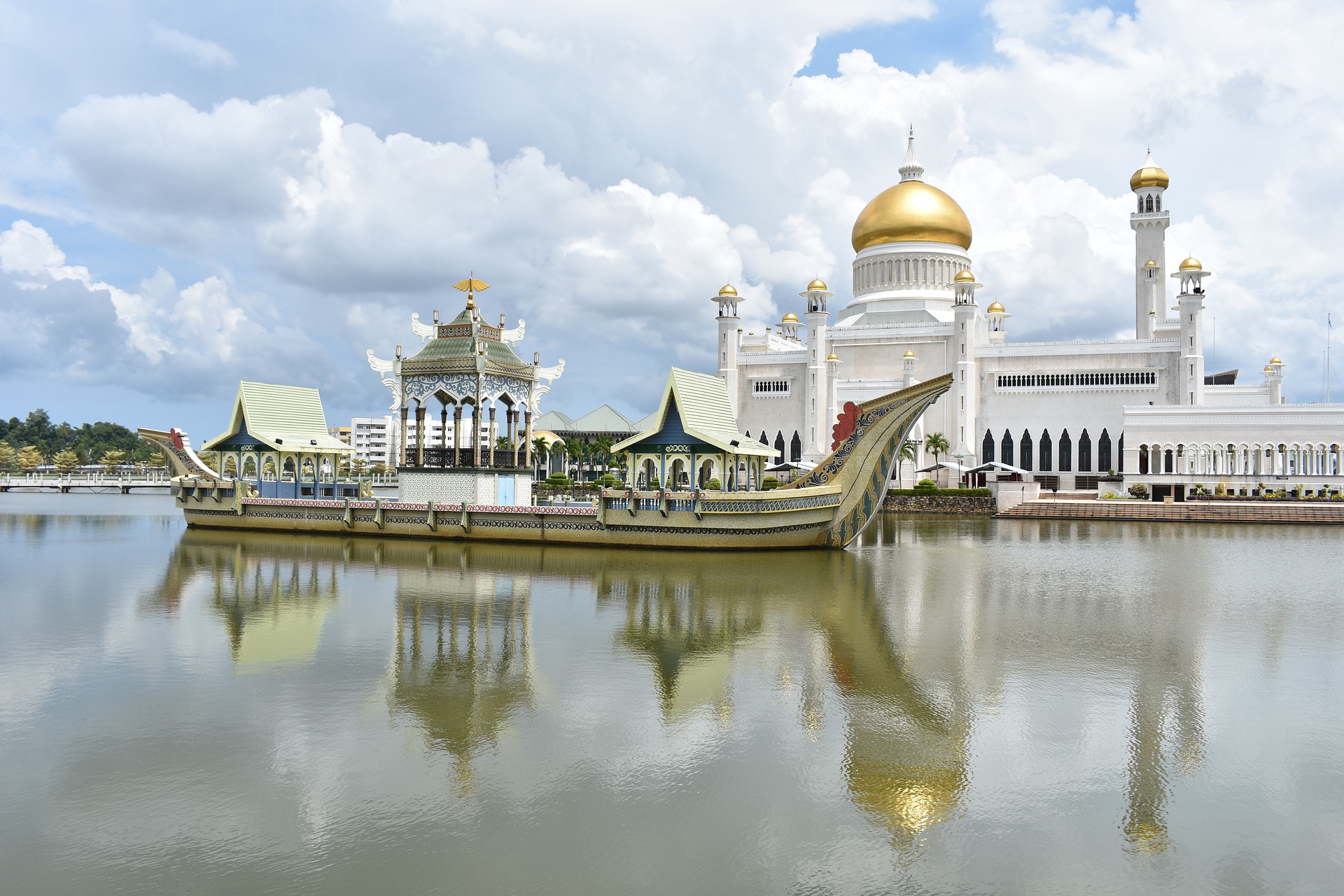
- Omar Ali Saifuddien Mosque: A magnificent mosque surrounded by a lagoon, showcasing Islamic architecture.
- Ulu Temburong National Park: A lush rainforest ideal for eco-tourism and nature walks.
- Kampong Ayer: A historic water village with traditional stilt houses and a glimpse into Brunei’s heritage.
- Royal Regalia Museum: A museum displaying the Sultan’s ceremonial items and gifts from around the world.
• Healthy Travel Advice:
Brunei is a clean and safe destination. Tap water in urban areas is generally safe to drink. Travelers should dress modestly, especially when visiting religious sites. Alcohol is strictly regulated, and public consumption is prohibited. Local cuisine includes healthy dishes such as ambuyat (a sago-based dish), nasi katok (rice with chicken and sambal), and a variety of tropical fruits. Mosquito repellent is recommended for visits to forested areas.
A Glimpse into Brunei’s History
Brunei has a rich history dating back over a thousand years. It was a thriving trading hub influenced by animism, Hinduism, and Buddhism before adopting Islam in the 14th century. The Sultanate of Brunei reached its peak in the 15th century under Sultan Bolkiah, becoming a dominant maritime power in Southeast Asia. Over time, internal conflicts and European colonization led to its decline. In 1888, Brunei became a British protectorate and remained under British influence until it gained full independence in 1984.
Current Political Landscape
Brunei is one of the few remaining absolute monarchies in the world. The current ruler, Sultan Hassanal Bolkiah, holds multiple roles including Head of State, Prime Minister, and Minister of Defense, Finance, and Foreign Affairs. The Sultan also serves as the religious leader of the country, reflecting the deep integration of Islamic principles in governance.
The political system includes advisory bodies such as the Privy Council, Religious Council, and a legislative council, all appointed by the Sultan. Brunei enjoys political stability and economic prosperity, largely due to its oil and gas resources. The government provides free healthcare, education, and housing, contributing to a high standard of living for its citizens.
Useful country information
Land area: 2,035 sq mi (5,271 sq km); total area: 2,228 sq mi (5,770 sq km)
Population (2021 est.):441,532
Capital and largest city: Bandar Seri Begawan, 200,000
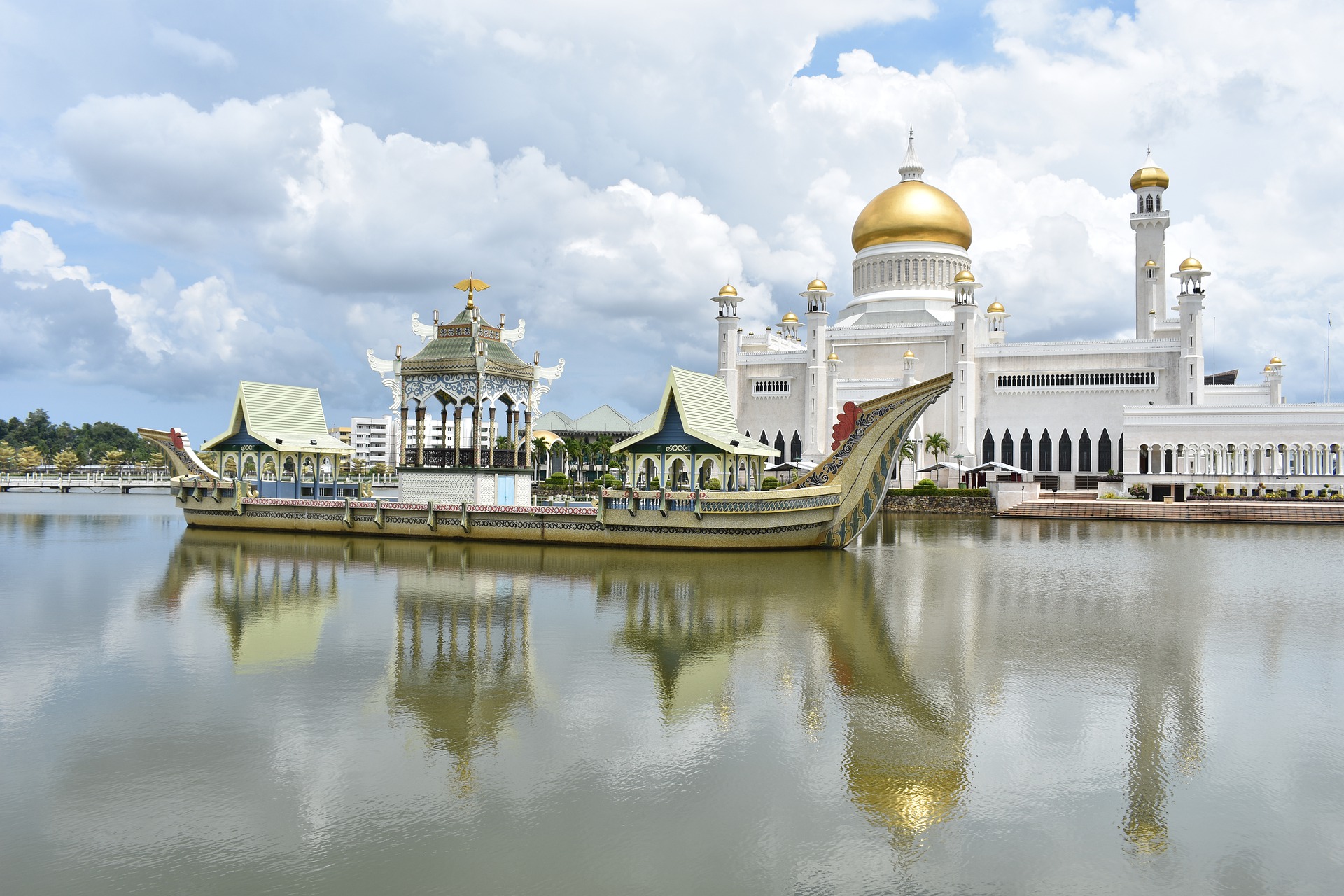
Bandar-Seri-Begawan: Capital City Profile
Other large cities: Kuala Belait 27,800, Seria 23,400
Monetary unit: Brunei dollar
National Name: Negara Brunei Darussalam
Languages: Malay (official), English, Chinese
Ethnicity/race: Malay 67%, Chinese 15%, indigenous 6%, other 12%
National Holiday: National Day, February 23
Religions: Islam (official religion) 67%, Buddhist 13%, Christian 10%, indigenous beliefs and other 10%
Get Travel Insurance Quote

Background:
The Sultanate of Brunei's heyday occurred between the 15th and 17th centuries, when its control extended over coastal areas of northwest Borneo and the southern Philippines.
Brunei subsequently entered a period of decline brought on by internal strife over royal succession, colonial expansion of European powers, and piracy.
In 1888, Brunei became a British protectorate; independence was achieved in 1984. Brunei benefits from extensive petroleum and natural gas fields, the source of one of the highest per capita GDPs in the less developed countries. The same family has now ruled in Brunei for over six centuries.