

Country's codes
International phone code for Tunisia: +216
3 letters: TUN
2 letters (internet domain): .TN
Digital country code: 788
Standard EAN-13 (country barcode): 619
 Olympic country code: TUN
Tunisia Travel Guide

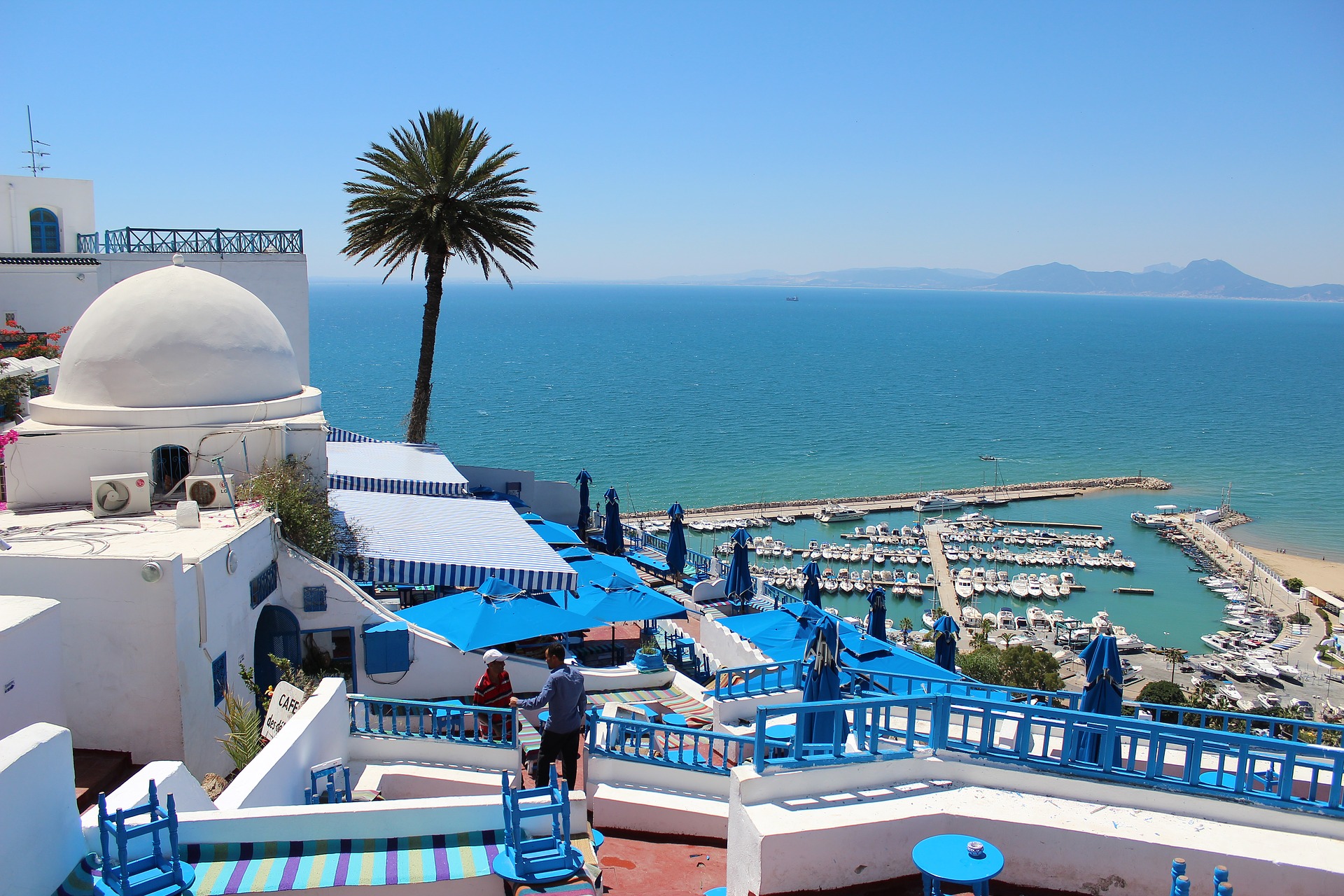
Tunisia combines stunning Mediterranean beaches, historic medinas, ancient Roman sites, and desert adventures. Travelers can explore UNESCO heritage sites, wander through colorful markets, and experience the magic of the Sahara.
Top Attractions in Tunisia
Carthage Ruins
Once a powerful Phoenician city that rivaled Rome, Carthage is now an impressive archaeological site near Tunis. Visitors can explore ancient baths, villas, and amphitheaters overlooking the Mediterranean Sea.
Sidi Bou Said
This picturesque coastal village is famous for its blue-and-white architecture, narrow streets, and beautiful views of the Mediterranean. It is one of Tunisia’s most photographed destinations.
Sahara Desert
The southern part of Tunisia opens into the vast Sahara Desert. Travelers can enjoy camel trekking, desert camps, and breathtaking sunset views over the sand dunes.
El Djem Amphitheatre
This remarkably preserved Roman amphitheater is one of the largest in the world and a UNESCO World Heritage Site. It once held up to 35,000 spectators.
Best Places to Visit
- Tunis – The capital city with a historic medina and modern districts.
- Hammamet – A popular seaside resort town known for beaches and luxury hotels.
- Sousse – A vibrant coastal city with a UNESCO-listed old town.
- Tozeur – Gateway to the Sahara and famous for palm oases.
- Djerba Island – Known for beautiful beaches and traditional villages.
Things to Do in Tunisia
- Explore ancient ruins in Carthage and El Djem.
- Relax on the Mediterranean beaches of Hammamet and Djerba.
- Ride camels and spend a night in the Sahara Desert.
- Visit traditional souks in the Tunis Medina.
- Discover filming locations from famous movies in the desert regions.
Travel Tips for Visitors
- The best seasons to visit are spring and autumn when the weather is mild.
- Light clothing is recommended, but modest dress is appreciated in traditional areas.
- French and Arabic are widely spoken, though English is common in tourist areas.
- Guided tours are helpful for visiting desert regions and archaeological sites.
Useful Country Information
Useful country information
Total area: 63,170 sq mi (163,610 sq km)
Population (2023 est.): about 12.3 million
Capital and largest city: Tunis, approximately 2.7 million in the metropolitan area

Tunis: Capital City Profile
Other major cities: Sfax, Sousse, Ettadhamen, Kairouan
Monetary unit: Tunisian dinar (TND)
National name: Republic of Tunisia
Official language: Arabic (French widely used)
Major religion: Islam (predominantly Sunni)
National holiday: Independence Day, March 20
Monetary unit: Tunisian dinar
Tunisian Republic
National name: Al-Jumhuriyah at-Tunisiyah
Languages: Arabic (official, commerce), French (commerce), Berber (Tamazight)
Ethnicity/race: Arab-Berber 98%, European 1%, Jewish and other 1%
Religions: Islam (Sunni) 99.1%, other (includes Christian, Jewish, Shia Muslim, and Baha'i) 1%.
National Holiday: March 20, Tunisia Independence Day.

Background:
Tunisia, at the northernmost bulge of Africa, thrusts out toward Sicily to mark the division between the eastern and western Mediterranean Sea.
Following independence from France in 1956, President Habib BOURGIUBA established a strict one-party state. He dominated the country for 31 years, repressing Islamic fundamentalism and establishing rights for women unmatched by any other Arab nation.
In November 1987, BOURGUIBA was removed from office and replaced by Zine el Abidine BEN ALI in a bloodless coup.
Street protests that began in Tunis in December 2010 over high unemployment, corruption, widespread poverty, and high food prices escalated in January 2011, culminating in rioting that led to hundreds of deaths.
This protests spread in the Arab world to Libya, Egypt, Syria and Yemen. The wave of both violent and non-violent demonstrations, protests, and riots were all meant to remove the corrupt leaders of those countries, and to find more democratic political solutions. This movements were coined the Arab Spring.


Source of Information:


